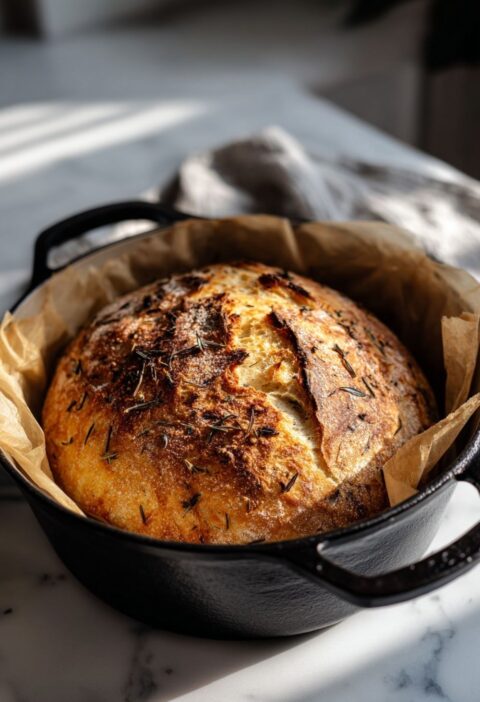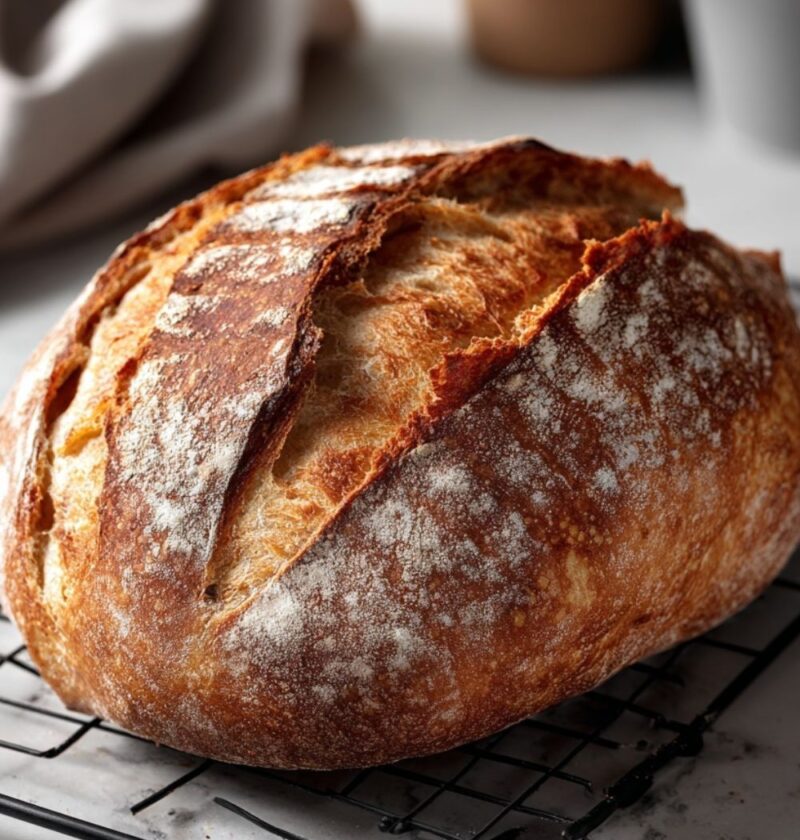
This crusty, chewy Rustic Italian Bread is made with simple flour, water, yeast, and salt, and ready in just under three hours. The golden, crackling crust reveals a soft, airy crumb that rivals any artisan bakery loaf. I bake this weekly for the perfect side to pasta nights.
The Secret To Getting It Right
I used to think making bakery-style bread required fancy equipment, but I learned that hydration is the real key to that open, airy texture. My early loaves were dense bricks because I kept adding flour to the sticky dough, fearing I couldn’t handle it. Once I trusted the process and left the dough tacky, the crumb completely transformed.
The second game-changer was steam. A simple tray of hot water placed on the bottom rack of the oven creates a humid environment that keeps the crust soft initially, allowing the bread to spring up fully before hardening. This simple trick is what gives you that professional, shattered-glass exterior that sings when you slice it.
Rustic Italian Bread Ingredients
- 3 cups (375g) Bread flour (spooned and leveled)
- 1 ¼ cups (300ml) Warm water (approx. 110°F/45°C)
- 2 ¼ tsp (7g) Instant yeast (1 standard packet)
- 1 ½ tsp Sea salt
- 1 tsp Sugar (optional, helps activate yeast)
- 1 tbsp Olive oil (for coating the bowl)
- Cornmeal (for dusting the baking sheet)

How To Make Rustic Italian Bread
- Activate the Yeast: In a small bowl or measuring cup, stir the sugar and yeast into the warm water. Let it sit for 5-10 minutes until the mixture becomes frothy and bubbly. If it doesn’t bubble, your yeast may be expired.
- Mix the Dough: In a large mixing bowl, combine the flour and salt. Pour in the yeast mixture and stir with a wooden spoon or sturdy spatula until a shaggy, sticky dough forms. You don’t need a stand mixer for this; it comes together easily by hand.
- First Rise: Lightly coat a clean bowl with olive oil. Transfer the dough into the oiled bowl, turning it once to coat the surface. Cover with plastic wrap or a warm, damp towel. Place in a draft-free warm spot and let rise for about 1 to 1.5 hours, or until doubled in size.
- Shape the Loaf: Gently punch down the risen dough to release air. Turn it out onto a lightly floured surface. Fold the sides toward the center to create a smooth ball or oval shape, being careful not to overwork it.
- Second Rise & Preheat: Sprinkle cornmeal on a baking sheet. Place the shaped loaf on the sheet, cover loosely, and let rest for 30 minutes. While it rests, preheat your oven to 450°F (230°C). Place an empty metal pan on the bottom rack of the oven to heat up.
- Bake with Steam: Just before baking, use a sharp knife or razor blade to score a slash across the top of the loaf. Place the baking sheet in the oven. Immediately pour 1 cup of hot water into the hot metal pan on the bottom rack and quickly close the door to trap the steam. Bake for 25-30 minutes until the crust is deep golden brown and the loaf sounds hollow when tapped on the bottom.

Recipe Tips
- Don’t over-flour: The dough is supposed to be sticky. Resist the urge to add more flour during kneading or shaping, as this will make the bread dense instead of airy.
- Create steam: The water in the bottom pan is crucial. The steam keeps the outer crust soft for the first few minutes, allowing the bread to expand rapidly (oven spring) without tearing.
- Let it cool: It is tempting to slice warm bread, but the interior is still cooking while it cools. Slicing too early will result in a gummy texture. Wait at least 20 minutes.
- Weigh your flour: If you have a kitchen scale, use it. Scooping flour with a cup often compacts it, leading to a dry loaf. If using cups, spoon the flour in and level it off.
What To Serve With Rustic Italian Bread
This bread is the ultimate vehicle for a simple dipping sauce of high-quality olive oil, balsamic vinegar, and cracked black pepper. It also pairs perfectly with hearty Italian soups like Zuppa Toscana or Minestrone, where the crust holds up well to dunking. For a lighter meal, serve warm slices alongside a crisp Caprese salad with fresh basil.

How To Store
Store the cooled bread in a paper bag at room temperature for up to 2 days; plastic bags will soften the crust too much. For longer storage, slice the entire loaf once cooled, place the slices in a freezer-safe bag, and freeze for up to 3 months. Toast frozen slices directly for the best texture.
FAQs
- Why is my bread dense?
Dense bread usually happens if the yeast was dead (didn’t foam) or if too much flour was added. Ensure your water isn’t too hot, as it can kill the yeast. - Can I use all-purpose flour?
Yes, you can use all-purpose flour, but the crust won’t be quite as chewy. Bread flour has higher protein content, which develops the gluten structure needed for that classic artisan texture. - Do I need a Dutch oven?
No, this recipe is designed for a standard baking sheet. However, if you have a Dutch oven, you can bake the bread inside it (lid on for 20 mins, lid off for 10) to trap steam automatically without the water pan method.
Nutrition
- Calories: 145 kcal
- Total Fat: 1g
- Saturated Fat: 0.2g
- Cholesterol: 0mg
- Sodium: 290mg
- Total Carbohydrate: 28g
- Protein: 5g
Try More Recipes:

Rustic Italian Bread
8
servings15
minutes3
hours50
minutes4
hours5
minutesRustic Italian Bread featuring a shattered glass crust and airy crumb using just four pantry staples and minimal hands-on time. This simple loaf is perfect for beginners and pairs beautifully with hearty soups. Ready in under 3 hours.
Ingredients
3 cups (375g) Bread flour (spooned and leveled)
1 ¼ cups (300ml) Warm water (approx. 110°F/45°C)
2 ¼ tsp (7g) Instant yeast (1 standard packet)
1 ½ tsp Sea salt
1 tsp Sugar (optional, helps activate yeast)
1 tbsp Olive oil (for coating the bowl)
Cornmeal (for dusting the baking sheet)
Directions
- Activate the Yeast: In a small bowl or measuring cup, stir the sugar and yeast into the warm water. Let it sit for 5-10 minutes until the mixture becomes frothy and bubbly. If it doesn’t bubble, your yeast may be expired.
- Mix the Dough: In a large mixing bowl, combine the flour and salt. Pour in the yeast mixture and stir with a wooden spoon or sturdy spatula until a shaggy, sticky dough forms. You don’t need a stand mixer for this; it comes together easily by hand.
- First Rise: Lightly coat a clean bowl with olive oil. Transfer the dough into the oiled bowl, turning it once to coat the surface. Cover with plastic wrap or a warm, damp towel. Place in a draft-free warm spot and let rise for about 1 to 1.5 hours, or until doubled in size.
- Shape the Loaf: Gently punch down the risen dough to release air. Turn it out onto a lightly floured surface. Fold the sides toward the center to create a smooth ball or oval shape, being careful not to overwork it.
- Second Rise & Preheat: Sprinkle cornmeal on a baking sheet. Place the shaped loaf on the sheet, cover loosely, and let rest for 30 minutes. While it rests, preheat your oven to 450°F (230°C). Place an empty metal pan on the bottom rack of the oven to heat up.
- Bake with Steam: Just before baking, use a sharp knife or razor blade to score a slash across the top of the loaf. Place the baking sheet in the oven. Immediately pour 1 cup of hot water into the hot metal pan on the bottom rack and quickly close the door to trap the steam. Bake for 25-30 minutes until the crust is deep golden brown and the loaf sounds hollow when tapped on the bottom.