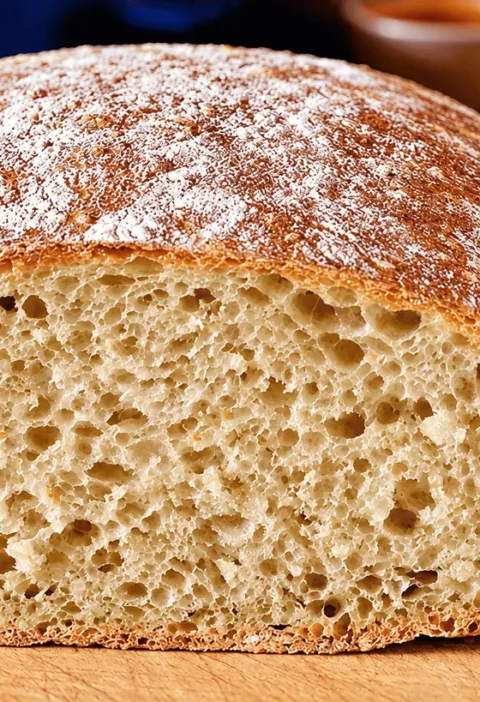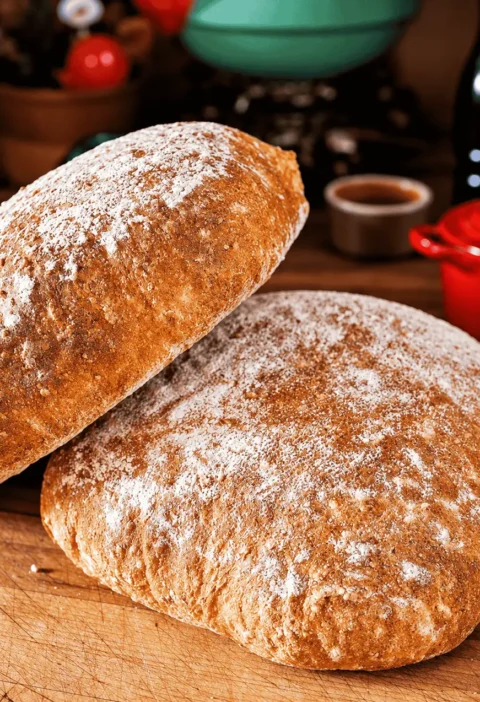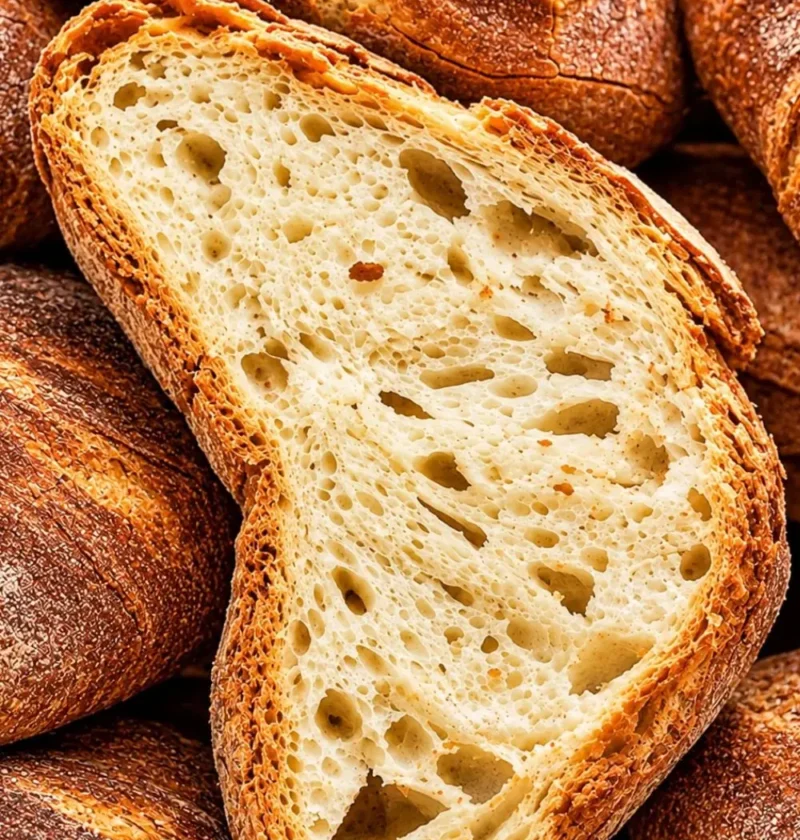
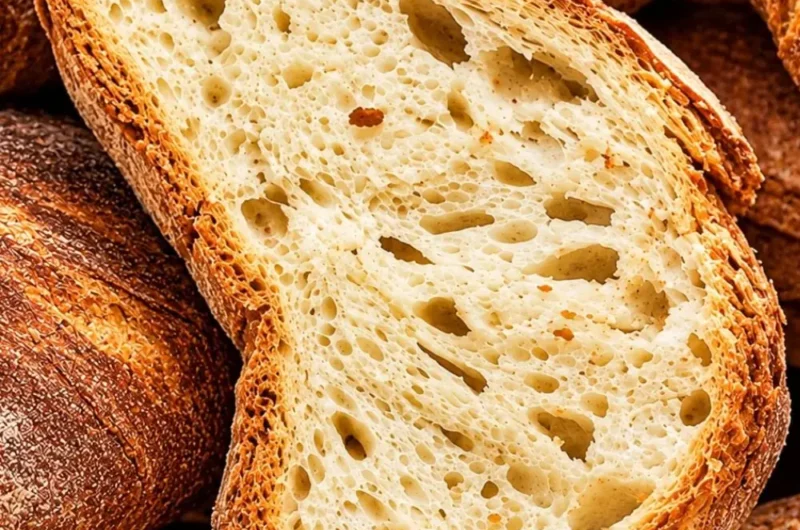
Altamura durum flour bread (Pane di Altamura) is a home-style loaf of durum flour, biga, water and salt, ready in 5 hours 40 minutes. It needs an overnight starter and makes 2 loaves, about 16 slices, with a thick crust and a chewy, open crumb.
Why This Recipe Works
The biga does the flavor work. A small starter of durum flour, water and a pinch of yeast ferments for 6 to 24 hours. It builds a deep, slightly sweet, wheaty taste. You only add a heaping 3/4 cup of it to the dough, so the final loaf stays light.
Durum flour soaks up water slowly, so hold back on extra water. The dough looks dry at first, then relaxes as the flour hydrates. Add water only if it is still crumbly after 2 minutes, and add it 1 teaspoon at a time.
Steam is what gives these loaves their crackling crust. A cast-iron skillet heats on the bottom rack, and ice cubes dropped in at loading time turn into steam right away. The crust stays soft long enough for the loaves to rise fully before it sets deep golden brown.
Altamura Durum Flour Bread (Pane di Altamura) Ingredients
For the biga (starter)
- 1/2 teaspoon active dry yeast
- 1/4 cup (60 g) warm water (105°F to 110°F / 40°C to 43°C)
- 3/4 cup (180 g) room-temperature water
- 1 3/4 cups (250 g) durum wheat flour (semola rimacinata)
For the dough
- 1/2 teaspoon active dry yeast
- 1/4 cup (60 g) warm water (105°F to 110°F / 40°C to 43°C)
- 1 1/2 cups plus 2 teaspoons (370 g) room-temperature water, plus extra if needed
- 7 ounces (200 g, about a heaping 3/4 cup) of the fermented biga
- 3 3/4 cups (500 g) durum wheat flour (semola rimacinata), plus extra for kneading and dusting
- 1 tablespoon (15 g) kosher salt
- Yellow cornmeal, for dusting the baking stone
- 1/2 cup ice cubes, for creating steam
How To Make Altamura Durum Flour Bread (Pane di Altamura)
Make the biga
- Bloom the yeast: In the bowl of a stand mixer, stir 1/2 teaspoon active dry yeast into 1/4 cup warm water. The water should be 105°F to 110°F (40°C to 43°C). Leave it for about 10 minutes, until it looks frothy, which shows the yeast is alive.
- Mix the starter: Pour in 3/4 cup room-temperature water. Add the 1 3/4 cups durum wheat flour (semola rimacinata) 1 cup at a time, so it blends in without lumps. Beat with the paddle on the lowest speed for 2 minutes, until smooth.
- Ferment the biga: Scrape the biga into a lightly oiled bowl and cover it tightly with plastic wrap. Leave it in a cool spot for 6 to 24 hours, until it has tripled but still feels wet and tacky. If you can’t bake right when it peaks, keep it covered in the refrigerator.
Mix and knead the dough
- Bloom the dough yeast: Wash the mixer bowl. Stir the other 1/2 teaspoon active dry yeast into 1/4 cup warm water, again between 105°F and 110°F (40°C to 43°C). Wait about 10 minutes, until frothy.
- Dissolve the biga: To the yeast, add 370 g of room-temperature water (1 1/2 cups plus 2 teaspoons) and 7 ounces of the biga. Beat with the paddle until the biga has broken down and the liquid looks milky white.
- Add the flour: Add the 3 3/4 cups durum wheat flour and the salt. Mix on low for about 2 minutes, until the dough pulls into one mass and leaves the sides of the bowl. Don’t add water yet. If it is still dry and crumbly after 2 minutes, trickle in more water, 1 teaspoon at a time. Stop when the dough turns firm and elastic.
- Knead: Switch to the dough hook and knead on low for 2 minutes. Then go to medium for 8 to 10 minutes, until the dough is smooth, firm and springy. Turn it out onto a surface dusted with durum flour and knead briefly by hand.
Rise, shape and proof
- First rise: Put the dough in a lightly oiled container and cover it tightly. Leave it at room temperature for about 3 hours, until it has tripled in volume.
- Shape the loaves: Turn the dough out onto a surface dusted with durum flour and cut it into 2 equal pieces. Shape each into a tight ball, then roll it into a plump oval with slightly tapered ends.
- Score and proof: With a sharp razor blade or bread lame, cut one deep lengthwise slash down the center of each loaf. Set the loaves gash-side down on a board or peel generously dusted with durum flour. Cover with a clean towel and let them rise 45 to 60 minutes, until doubled and bubbly.
Bake with steam
- Heat the oven: About 30 to 45 minutes before baking, set an empty cast-iron skillet on the bottom rack. Put a baking stone on the rack directly above it, then preheat the oven to 425°F (220°C). The stone needs this long to get fully hot.
- Flip and re-score: Gently turn the proofed loaves over so the gash faces up. If the cut sealed shut during the rise, run the razor blade down it once more.
- Load and steam: Sprinkle the hot stone lightly with cornmeal and slide the loaves on. Toss the 1/2 cup ice cubes into the skillet right away and shut the oven door fast, to trap the steam.
- Bake and cool: Leave the loaves in the oven for 50 to 55 minutes. They are done when the crust turns deep golden brown and the bottoms sound hollow when tapped. Move them to a wire rack and cool completely before slicing, so the crumb finishes setting.
Recipe Tips
- Be patient with the water: Durum flour absorbs moisture slowly. A dough that looks too dry at first often softens on its own, and too much water makes it slack and hard to shape.
- Use semola rimacinata: This is finely re-milled durum flour. Coarse pasta semolina makes a gritty crumb and a dough that won’t stretch.
- Keep the biga wet: It should feel wet and tacky when it peaks. If it looks stiff, your kitchen may be too cold, so give it more time.
- Cool before cutting: The crumb is still setting for a while after baking. Slice too early and it turns gummy.
What To Serve With Altamura Durum Flour Bread (Pane di Altamura)
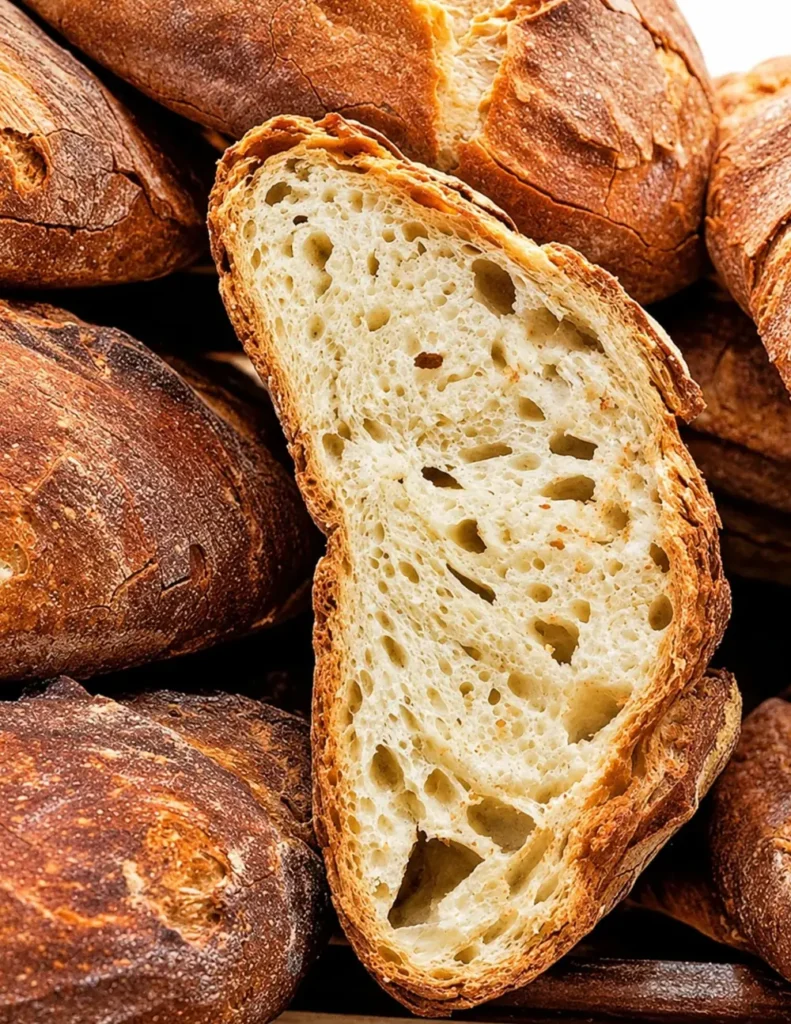
Tear off a thick slice and eat it with good olive oil, or use it to mop up a bowl of soup or tomato sauce. It also makes sturdy toast for bruschetta, topped with ripe tomatoes and basil.
How To Store
- Counter: Keep a cut loaf cut-side down on a board, or wrap it in a clean towel, for up to 2 days. A paper bag keeps the crust crisp better than plastic.
- Freezer: Slice the cooled loaf, wrap it tightly, and freeze for up to 3 months. Toast slices straight from the freezer.
- Make ahead: The biga can wait in the refrigerator, covered, once it has peaked. Bring it back to room temperature before you mix the dough.
FAQs
Can I use regular bread flour instead of durum flour?
You can, but the loaf will no longer taste like Pane di Altamura. Durum gives the golden color, the sweet wheaty flavor and the chewy crumb. Bread flour makes a whiter, softer loaf and needs less time to knead.
Do I need a baking stone and a cast-iron skillet?
They give the best crust, but a heavy upside-down baking sheet works in place of the stone. For steam, any heavy oven-safe pan on the bottom rack will do. Never use glass, since the ice cubes can crack it.
Is Altamura bread vegan?
Yes. The loaf has only durum flour, water, yeast and salt, with no milk, eggs, butter or honey. It is not gluten free.
Why is my crust pale or my loaf dense?
A pale crust usually means the oven or stone wasn’t hot enough, or the steam escaped too soon. A dense loaf points to under-proofing, or a biga that never peaked, so give the starter and the rises the full time.
Nutrition
Estimated per serving (1 of 16), worked out from the ingredients.
- Calories: about 160 kcal
- Total Fat: 1g
- Total Carbohydrate: 32g
- Dietary Fiber: 2g
- Protein: 6g
Altamura Durum Flour Bread (Pane di Altamura)
Two chewy loaves of durum flour bread with a thick golden crust, built on an overnight biga and baked with steam. A home-style take on Pane di Altamura.
16
servings40
minutes5
hours340
minutesIngredients
- For the biga (starter)
1/2 teaspoon active dry yeast
1/4 cup (60 g) warm water (105°F to 110°F / 40°C to 43°C)
3/4 cup (180 g) room-temperature water
1 3/4 cups (250 g) durum wheat flour (semola rimacinata)
- For the dough
1/2 teaspoon active dry yeast
1/4 cup (60 g) warm water (105°F to 110°F / 40°C to 43°C)
1 1/2 cups plus 2 teaspoons (370 g) room-temperature water, plus extra if needed
7 ounces (200 g, about a heaping 3/4 cup) of the fermented biga
3 3/4 cups (500 g) durum wheat flour (semola rimacinata), plus extra for kneading and dusting
1 tablespoon (15 g) kosher salt
Yellow cornmeal, for dusting the baking stone
1/2 cup ice cubes, for creating steam
Directions
- Bloom the yeast: In the bowl of a stand mixer, stir 1/2 teaspoon active dry yeast into 1/4 cup warm water. The water should be 105°F to 110°F (40°C to 43°C). Leave it for about 10 minutes, until it looks frothy, which shows the yeast is alive.
- Mix the starter: Pour in 3/4 cup room-temperature water. Add the 1 3/4 cups durum wheat flour (semola rimacinata) 1 cup at a time, so it blends in without lumps. Beat with the paddle on the lowest speed for 2 minutes, until smooth.
- Ferment the biga: Scrape the biga into a lightly oiled bowl and cover it tightly with plastic wrap. Leave it in a cool spot for 6 to 24 hours, until it has tripled but still feels wet and tacky. If you can’t bake right when it peaks, keep it covered in the refrigerator.
- Bloom the dough yeast: Wash the mixer bowl. Stir the other 1/2 teaspoon active dry yeast into 1/4 cup warm water, again between 105°F and 110°F (40°C to 43°C). Wait about 10 minutes, until frothy.
- Dissolve the biga: To the yeast, add 370 g of room-temperature water (1 1/2 cups plus 2 teaspoons) and 7 ounces of the biga. Beat with the paddle until the biga has broken down and the liquid looks milky white.
- Add the flour: Add the 3 3/4 cups durum wheat flour and the salt. Mix on low for about 2 minutes, until the dough pulls into one mass and leaves the sides of the bowl. Don’t add water yet. If it is still dry and crumbly after 2 minutes, trickle in more water, 1 teaspoon at a time. Stop when the dough turns firm and elastic.
- Knead: Switch to the dough hook and knead on low for 2 minutes. Then go to medium for 8 to 10 minutes, until the dough is smooth, firm and springy. Turn it out onto a surface dusted with durum flour and knead briefly by hand.
- First rise: Put the dough in a lightly oiled container and cover it tightly. Leave it at room temperature for about 3 hours, until it has tripled in volume.
- Shape the loaves: Turn the dough out onto a surface dusted with durum flour and cut it into 2 equal pieces. Shape each into a tight ball, then roll it into a plump oval with slightly tapered ends.
- Score and proof: With a sharp razor blade or bread lame, cut one deep lengthwise slash down the center of each loaf. Set the loaves gash-side down on a board or peel generously dusted with durum flour. Cover with a clean towel and let them rise 45 to 60 minutes, until doubled and bubbly.
- Heat the oven: About 30 to 45 minutes before baking, set an empty cast-iron skillet on the bottom rack. Put a baking stone on the rack directly above it, then preheat the oven to 425°F (220°C). The stone needs this long to get fully hot.
- Flip and re-score: Gently turn the proofed loaves over so the gash faces up. If the cut sealed shut during the rise, run the razor blade down it once more.
- Load and steam: Sprinkle the hot stone lightly with cornmeal and slide the loaves on. Toss the 1/2 cup ice cubes into the skillet right away and shut the oven door fast, to trap the steam.
- Bake and cool: Leave the loaves in the oven for 50 to 55 minutes. They are done when the crust turns deep golden brown and the bottoms sound hollow when tapped. Move them to a wire rack and cool completely before slicing, so the crumb finishes setting.