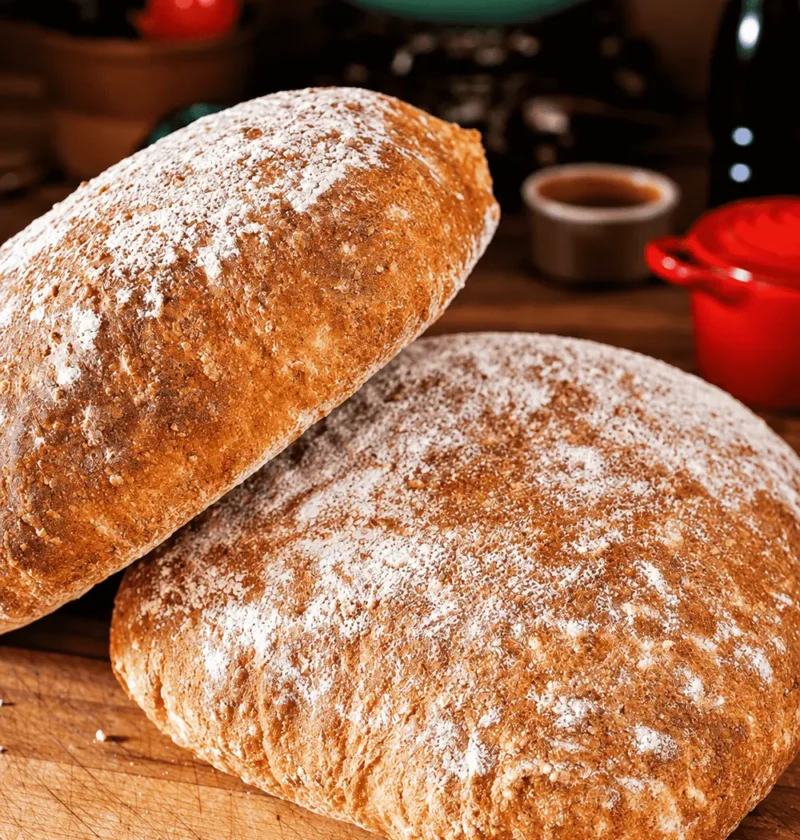
Rustic wheat and whole wheat bread is a wet, bubbly dough of two flours and biga, ready in about 1 hour 25 minutes of work. It makes 2 large or 3 smaller loaves, plus about 4 hours of rising, with a deep brown, floury crust.
Why This Recipe Works
The dough is mixed wet on purpose. Beat it hard with a wooden spoon, then fold it with a bench scraper and a little flour. Water in the dough turns to steam in the oven, and that steam opens up the crumb.
A cup of biga does a lot of work. It brings a mild, slightly sour flavor and a head start on rising. Break it up with your fingers in the water so it spreads evenly through the dough.
The loaves go in only after you dimple them and let them rest. Dimpling pushes the biggest gas bubbles out, so you don’t get one huge hole. A hot stone dusted with cornmeal then gives the bread a sudden push up and a crisp bottom.
Rustic Wheat and Whole Wheat Bread Ingredients
For the yeast
- 1 1/4 teaspoons (3.5 g) active dry yeast
- 1/4 cup (60 g) warm water
For the dough
- 2 1/2 cups (600 g) room-temperature water
- 1 full cup (250 g) biga
- 1 3/4 cups (250 g) whole wheat flour, preferably stone-ground
- 3 3/4 cups (500 g) unbleached all-purpose flour, plus extra for kneading
- 1 tablespoon (15 g) salt, plus 1 teaspoon (5 g) more, optional
For baking
- Cornmeal, for the baking stones
How To Make Rustic Wheat and Whole Wheat Bread
Mix the dough
- Wake the yeast: Sprinkle the yeast over the 1/4 cup warm water in a big bowl. Wait about 10 minutes, until the surface turns creamy, which tells you the yeast is alive.
- Add water and biga: Pour in the 2 1/2 cups room-temperature water and add the biga. Break the biga apart with your fingers and stir hard, so no lumps are left.
- Beat in the flour: Whisk the whole wheat flour, all-purpose flour and 1 tablespoon salt together, adding the extra teaspoon if you like. Add this mix to the bowl 2 cups at a time, beating with a wooden spoon for 4 to 5 minutes.
- Prepare the counter: Dust the counter generously with flour and dust a bench scraper too. Keep extra flour within reach for your hands, because the dough is very sticky.
- Fold the dough: Scrape the dough onto the counter. Fold and knead it with the scraper and a little more flour until it sticks less. It will still be quite wet, and that is fine.
Let it rise
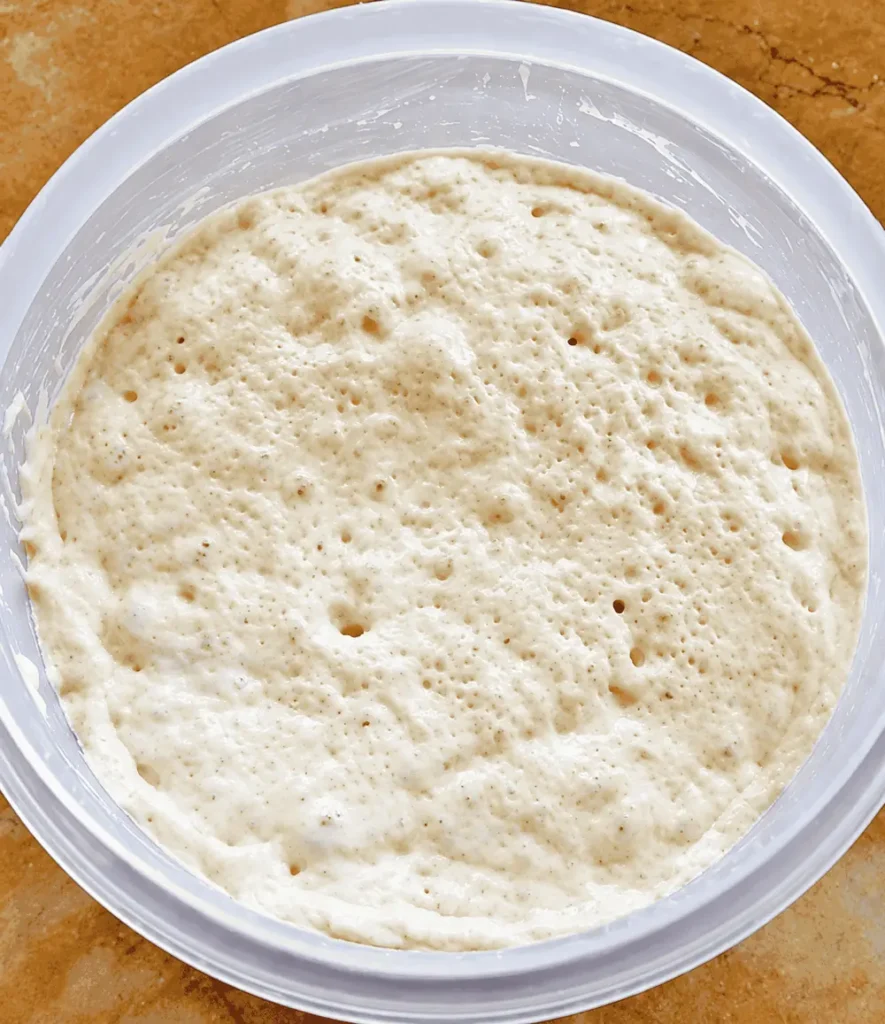
- First rise: Move the dough to a large, lightly oiled bowl and seal it tightly with plastic wrap. Let it sit for about 3 hours, until it has grown to three times its size and bubbles fill it. Leave it untouched, because pressing it down loses the air.
- Divide: Tip the dough onto a well-floured counter. Cut it into two large pieces or three smaller ones.
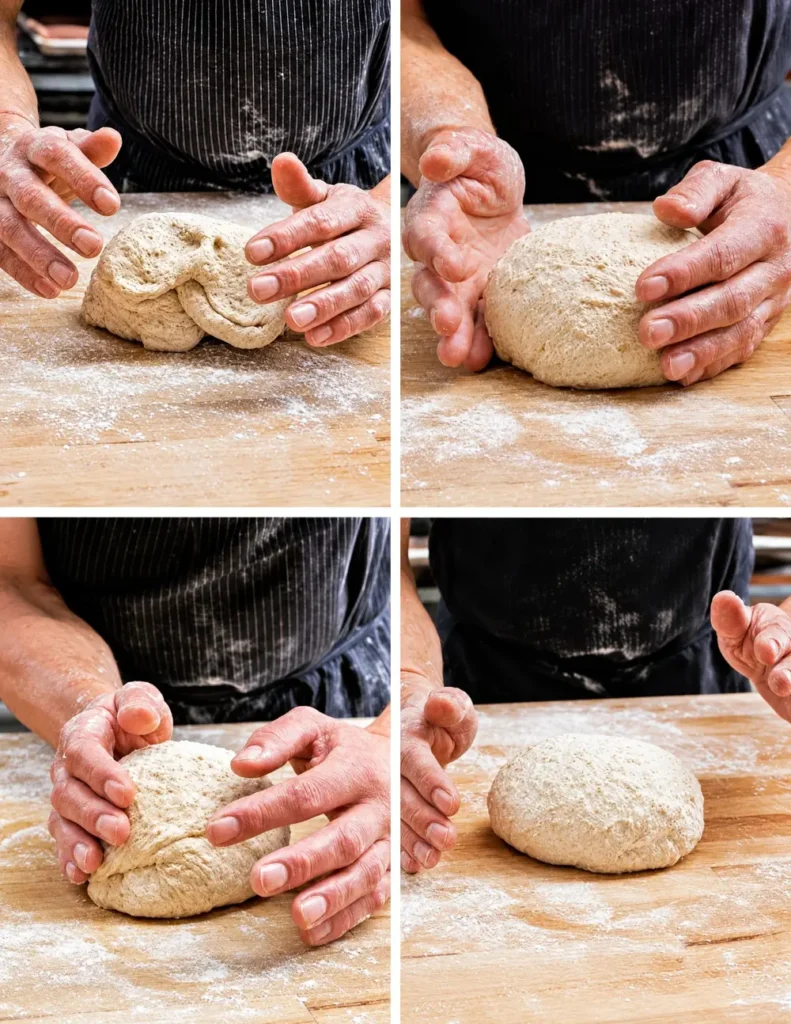
- Shape the rounds: Tuck the edges of each piece underneath and cup your hands around it. Drag it along the counter until the top feels tight and smooth.
- Second rise: Place the rounds rough side up on floured baking sheets, peels or floured parchment. Cover them with a kitchen towel and leave them for about 1 hour. They are ready when you can see bubbles forming under the surface.
Bake the loaves
- Heat the oven: Half an hour before baking, heat the oven to 450°F (230°C) with the baking stones inside. A thick cast-iron or aluminum griddle or heavy baking sheets also work.
- Dimple and rest: Press your fingertips or knuckles all over the top of each loaf to dimple it. Let the loaves rest for 10 to 15 minutes.
- Bake: Sprinkle cornmeal over the hot stones, then gently slide or tip each loaf onto them. The loaves start out flat, but the heat makes them puff up fast. Bake for 45 to 55 minutes.
- Cool: Move the loaves to wire racks and let them cool before you slice them.
Recipe Tips
- Don’t add too much flour: The dough should stay wet and sticky. Extra flour makes a tight, dense crumb, so use only enough to handle it.
- Keep the rise covered: Seal the bowl tightly and leave the dough alone. Pressing it down loses the bubbles that give the bread its open crumb.
- Use real heat: Preheat the stones for the full 30 minutes. A stone that is not hot enough gives a pale, flat loaf.
- Cool before slicing: Wait until the loaves are cool. The crumb is still setting inside, and a warm loaf turns gummy when cut.
What To Serve With Rustic Wheat and Whole Wheat Bread
Slice it thick and serve it with olive oil and sea salt. It also goes well next to a bowl of soup or a plate of cured meats and cheese.
How To Store
- Counter: Keep a cut loaf cut side down on a board, or wrapped in a clean towel, for up to 2 days.
- Freezer: Slice a cooled loaf and freeze the slices in a freezer bag for up to 3 months. Toast them straight from the freezer.
- Reheat: Warm a whole loaf in a 350°F (175°C) oven for about 10 minutes to bring back the crust.
FAQs
What is biga and can I skip it?
Biga is an Italian pre-ferment made of flour, water and a little yeast that sits for hours before you use it. It adds flavor and strength to the dough, so this recipe needs it. Make it ahead and keep it ready before you start the dough.
Can I make this dough ahead?
The source recipe does not include a ahead step, but you can bake the loaves and freeze them. Slice a cooled loaf first, then freeze the slices for up to 3 months.
Is this bread vegan?
Yes, as long as your biga is made only with flour, water and yeast. The dough itself has no milk, eggs or butter. It is not gluten free, because it uses wheat flour.
Why is my dough so sticky?
It should be. This dough is mixed wet to get a soft crumb with big holes. Use a bench scraper and a light dusting of flour, and don’t add more than you need.
Nutrition
Estimated per serving (1 of 12), worked out from the ingredients.
- Calories: about 220 kcal
- Total Fat: 1g
- Total Carbohydrate: 45g
- Dietary Fiber: 3g
- Protein: 7g
Rustic Wheat and Whole Wheat Bread
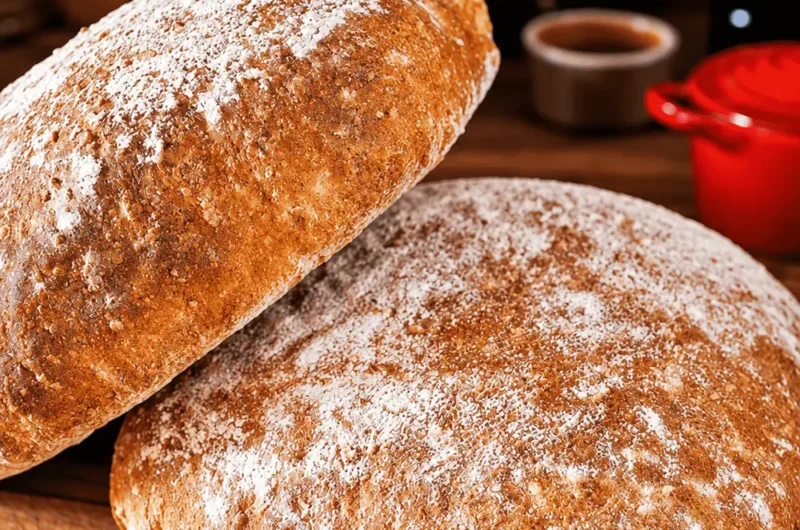
Big round loaves of whole wheat and all-purpose flour with a cup of biga, baked on hot stones. Makes 2 large or 3 smaller loaves with a deep brown, floury crust.
12
servings30
minutes55
minutes85
minutesIngredients
- For the yeast
1 1/4 teaspoons (3.5 g) active dry yeast
1/4 cup (60 g) warm water
- For the dough
2 1/2 cups (600 g) room-temperature water
1 full cup (250 g) biga
1 3/4 cups (250 g) whole wheat flour, preferably stone-ground
3 3/4 cups (500 g) unbleached all-purpose flour, plus extra for kneading
1 tablespoon (15 g) salt, plus 1 teaspoon (5 g) more, optional
- For baking
Cornmeal, for the baking stones
Directions
- Wake the yeast: Sprinkle the yeast over the 1/4 cup warm water in a big bowl. Wait about 10 minutes, until the surface turns creamy, which tells you the yeast is alive.
- Add water and biga: Pour in the 2 1/2 cups room-temperature water and add the biga. Break the biga apart with your fingers and stir hard, so no lumps are left.
- Beat in the flour: Whisk the whole wheat flour, all-purpose flour and 1 tablespoon salt together, adding the extra teaspoon if you like. Add this mix to the bowl 2 cups at a time, beating with a wooden spoon for 4 to 5 minutes.
- Prepare the counter: Dust the counter generously with flour and dust a bench scraper too. Keep extra flour within reach for your hands, because the dough is very sticky.
- Fold the dough: Scrape the dough onto the counter. Fold and knead it with the scraper and a little more flour until it sticks less. It will still be quite wet, and that is fine.
- First rise: Move the dough to a large, lightly oiled bowl and seal it tightly with plastic wrap. Let it sit for about 3 hours, until it has grown to three times its size and bubbles fill it. Leave it untouched, because pressing it down loses the air.
- Divide: Tip the dough onto a well-floured counter. Cut it into two large pieces or three smaller ones.
- Shape the rounds: Tuck the edges of each piece underneath and cup your hands around it. Drag it along the counter until the top feels tight and smooth.
- Second rise: Place the rounds rough side up on floured baking sheets, peels or floured parchment. Cover them with a kitchen towel and leave them for about 1 hour. They are ready when you can see bubbles forming under the surface.
- Heat the oven: Half an hour before baking, heat the oven to 450°F (230°C) with the baking stones inside. A thick cast-iron or aluminum griddle or heavy baking sheets also work.
- Dimple and rest: Press your fingertips or knuckles all over the top of each loaf to dimple it. Let the loaves rest for 10 to 15 minutes.
- Bake: Sprinkle cornmeal over the hot stones, then gently slide or tip each loaf onto them. The loaves start out flat, but the heat makes them puff up fast. Bake for 45 to 55 minutes.
- Cool: Move the loaves to wire racks and let them cool before you slice them.