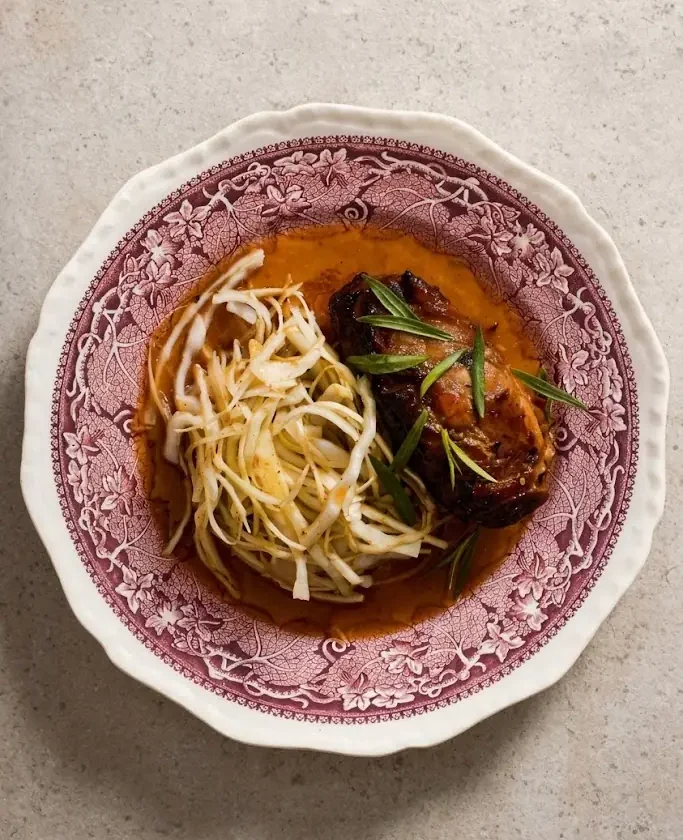
Roasted pork shank with honey and mustard is a slow-roasted dinner of 3 shanks glazed with Dijon and honey, ready in 3 hours 25 minutes. It feeds 3, and almost all of that time is hands-off while the oven does the work.
Why This Recipe Works
The glaze is just grainy Dijon mustard and acacia honey. The honey browns and turns sticky in the heat, while the mustard keeps the sweetness from going flat. Brushing it on before the shanks go in the oven means it cooks into the surface for the whole roast.
Butter, white wine and half the tarragon go into the pan with the meat. They mix with the pork juices into a loose sauce that keeps the shanks from drying out. Basting often spoons that sauce back over the meat, so the glaze stays glossy and the meat stays moist.
The raw cabbage is sliced very finely and dressed with the cooking juices. It stays crisp and takes on the sweet, tangy flavor of the pan, so each bite of rich pork has something fresh next to it.
Roasted Pork Shank with Honey and Mustard Ingredients
For the pork shanks
- 3 tablespoons grainy Dijon mustard
- 2 tablespoons acacia honey
- 3 pork shanks
- 3 tablespoons butter
- Scant 1 cup (7 fluid ounces) white wine
- 3 sprigs tarragon, leaves only, chopped
- Salt
For the cabbage
- 1/2 green (white) cabbage, cored and very finely sliced
How To Make Roasted Pork Shank with Honey and Mustard
Glaze the pork shanks
- Heat the oven: Preheat the oven to 400°F (200°C). Stir the mustard and honey together in a small bowl until smooth.
- Season and brush: Season the pork shanks with salt. Brush them all over with the mustard and honey mixture, so every side gets a coat of glaze.
Roast the pork
- Start the pan: Melt the butter in a roasting pan over medium heat. Add the pork shanks, the white wine and half of the chopped tarragon.
- Roast and baste: Move the pan to the oven and cook for about 3 hours, until the meat is tender. Baste the shanks often with the cooking juices, so the glaze keeps building and the meat doesn’t dry out.
- Rest the meat: Take the shanks out of the oven and cover them with foil. Let the meat rest for 10 minutes, so the juices settle back into it.
Finish and serve
- Dress the cabbage: Toss the finely sliced cabbage with some of the cooking juices from the pan.
- Add the tarragon: Sprinkle the remaining tarragon over the pork shanks. Serve them with the dressed cabbage and the rest of the pan juices.
If you use smoked shanks
- Simmer first: Smoked shanks usually come precooked, so skip the 3-hour roast. Simmer the meat in a pot of water for 1 hour to warm it through and loosen it.
- Roast shorter: Brush the simmered shanks with the glaze, then roast them in a 350°F (175°C) oven for 1 hour, basting a few times, before resting and serving as above.
Recipe Tips
- Slice the cabbage thin: Very fine strips soak up the warm juices and stay pleasantly crisp. Thick pieces taste raw and stay stiff.
- Baste often: Spoon the pan juices over the meat every time you open the oven. This is what keeps the glaze glossy and the pork from drying out.
- Go easy on the salt: Mustard and the pan juices both add salt as they reduce. Season the shanks lightly at the start and taste the juices before you add more.
What To Serve With Roasted Pork Shank with Honey and Mustard
Serve the shanks with the dressed cabbage and plenty of pan juices spooned over the top. Mashed potatoes or crusty bread would help you catch every drop of sauce.
How To Store
- Fridge: Keep leftover pork and cabbage in separate covered containers in the fridge for 3 to 4 days.
- Freezer: Freeze the cooked pork with some of its juices for 2 to 3 months. Thaw it overnight in the fridge, never on the counter.
- Reheat: Warm the pork gently in a covered pan with a splash of the juices until it is hot all the way through. Dress fresh cabbage rather than reheating it.
FAQs
Can I use another cut of pork instead of shanks?
Bone-in pork shoulder or ham hock can work, but the cooking time changes. Roast until the meat is fork-tender and keep basting with the pan juices.
Is this roasted pork shank gluten free?
Yes, based on the ingredient list. Check your grainy Dijon mustard label, since a few brands add ingredients that contain gluten.
Can I make it ahead?
Yes. Roast the shanks, cool them with their juices, and refrigerate for up to 3 days. Reheat them covered and slice the cabbage fresh just before serving.
Why is my pork still tough after 3 hours?
Shanks are a tough, working muscle, so size and oven temperature matter. If the meat still resists a fork, cover the pan with foil and keep roasting, basting every so often, until it gives easily.
Nutrition
Estimated per serving (1 of 3), worked out from the ingredients.
- Calories: about 780 kcal
- Total Fat: 42g
- Total Carbohydrate: 22g
- Dietary Fiber: 4g
- Protein: 62g
Roasted Pork Shank with Honey and Mustard
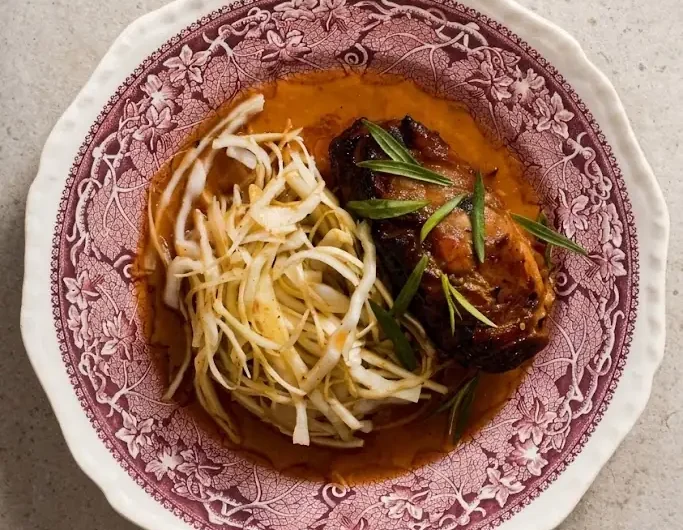
Pork shanks glazed with grainy Dijon mustard and acacia honey, then roasted in butter, white wine and tarragon until tender. Served with finely sliced cabbage dressed in the pan juices, enough for 3.
3
servings15
minutes3
hours10
minutes205
minutesIngredients
- For the pork shanks
3 tablespoons grainy Dijon mustard
2 tablespoons acacia honey
3 pork shanks
3 tablespoons butter
Scant 1 cup (7 fluid ounces) white wine
3 sprigs tarragon, leaves only, chopped
Salt
- For the cabbage
1/2 green (white) cabbage, cored and very finely sliced
Directions
- Heat the oven: Preheat the oven to 400°F (200°C). Stir the mustard and honey together in a small bowl until smooth.
- Season and brush: Season the pork shanks with salt. Brush them all over with the mustard and honey mixture, so every side gets a coat of glaze.
- Start the pan: Melt the butter in a roasting pan over medium heat. Add the pork shanks, the white wine and half of the chopped tarragon.
- Roast and baste: Move the pan to the oven and cook for about 3 hours, until the meat is tender. Baste the shanks often with the cooking juices, so the glaze keeps building and the meat doesn’t dry out.
- Rest the meat: Take the shanks out of the oven and cover them with foil. Let the meat rest for 10 minutes, so the juices settle back into it.
- Dress the cabbage: Toss the finely sliced cabbage with some of the cooking juices from the pan.
- Add the tarragon: Sprinkle the remaining tarragon over the pork shanks. Serve them with the dressed cabbage and the rest of the pan juices.
- Simmer first: Smoked shanks usually come precooked, so skip the 3-hour roast. Simmer the meat in a pot of water for 1 hour to warm it through and loosen it.
- Roast shorter: Brush the simmered shanks with the glaze, then roast them in a 350°F (175°C) oven for 1 hour, basting a few times, before resting and serving as above.