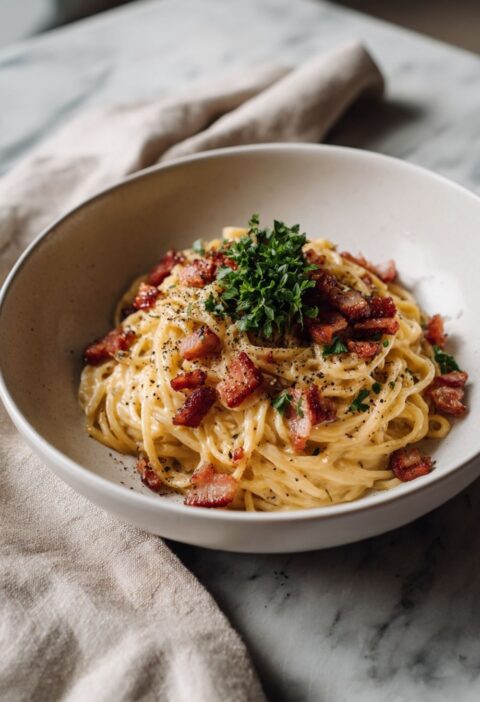
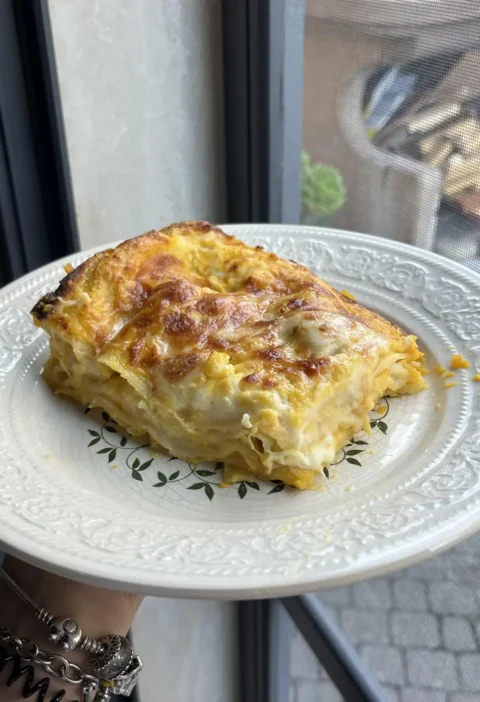
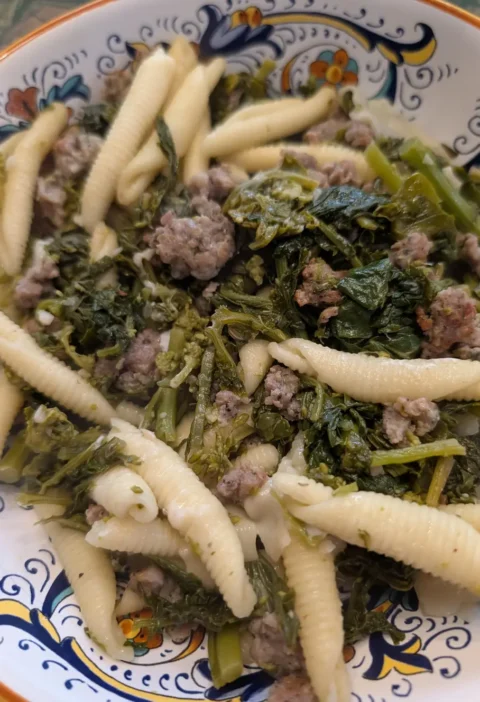
For those who appreciate the bold, sophisticated “funk” of blue cheese, Italian Gorgonzola Pasta is the ultimate indulgence. This dish is a masterclass in Italian simplicity, relying on the quality of a few key ingredients to create a sauce that is velvety, pungent, and incredibly luxurious.
While Gorgonzola can be polarizing when eaten raw, it undergoes a magical transformation when melted into warm cream. It mellows into a buttery, savory coating that clings to every ridge of your pasta. Whether you use Gorgonzola Dolce for a milder, sweeter finish or Piccante for a sharper bite, this recipe brings a high-end restaurant experience to your dinner table in less time than it takes to boil water.
Try More Pasta Recipes:
- Stanley Tucci Italian Cacio e Pepe
- Italian Pasta with Peppers Recipe
- Italian Pasta with Olives Recipe
Why You Will Love This Italian Gorgonzola Pasta:
- 15-Minute Gourmet: This is one of the fastest “fancy” meals you can make; the sauce comes together in the time it takes for the pasta to cook.
- Complex Flavor Profile: You get a perfect balance of salty, earthy, and creamy notes that far exceed the effort involved.
- Silky Texture: Without the need for flour or thickeners, the cheese and cream create a naturally glossy, restaurant-style “mantecatura.”
- Highly Adaptable: It serves as a perfect blank canvas for additions like toasted walnuts, crispy pancetta, or even sliced pears for a sweet-savory twist.
- Vegetarian-Friendly: It’s a naturally meat-free dish that feels substantial and filling enough for any carnivore.
- Minimal Cleanup: One pot for the pasta and one skillet for the sauce is all you need for this culinary masterpiece.

Italian Gorgonzola Pasta Ingredients
- 1 lb (500g) Short pasta (Penne, Rigatoni, or Fusilli work best)
- 6 oz (170g) Gorgonzola cheese (Dolce for creaminess, Piccante for bold flavor)
- 1 cup Heavy cream
- 1/2 cup Freshly grated Parmesan cheese
- 2 tbsp Unsalted butter
- 2 cloves Garlic, finely minced
- Freshly cracked black pepper (be generous!)
- Optional: 1/2 cup toasted walnuts and fresh parsley for garnish
How To Make Italian Gorgonzola Pasta
- Boil Pasta: Cook the pasta in a large pot of salted water until al dente. Crucial: Reserve 1 cup of starchy pasta water before draining.
- Infuse Butter: While the pasta cooks, melt butter in a large skillet over medium-low heat. Add the garlic and sauté for 1 minute until fragrant but not browned.
- Melt the “Blue”: Pour in the heavy cream and bring to a gentle simmer. Crumble the Gorgonzola into the cream, whisking gently until the cheese is completely melted and the sauce is smooth.
- Emulsify: Stir in the Parmesan cheese and a generous amount of black pepper. (Gorgonzola is naturally salty, so taste before adding extra salt).
- Toss: Add the cooked pasta directly to the skillet. Toss vigorously, adding splashes of the reserved pasta water as needed to create a glossy sauce that clings to the noodles.
- Serve: Plate immediately, topped with toasted walnuts and fresh parsley if desired.

Pro Recipe Tips
- The “Dolce” Secret: For the creamiest, most beginner-friendly sauce, look for Gorgonzola Dolce (sweet). It has a higher moisture content and melts almost instantly. If you want a sharp, crumbly, and pungent kick, go for Gorgonzola Piccante.
- Temperature Control is Key: Never let the cream reach a rolling boil once you’ve added the cheese. High heat can cause the Gorgonzola to “break,” separating the fat from the solids and leaving you with a greasy, grainy sauce. Keep it at a gentle simmer.
- Reserve the “Liquid Gold”: Always save at least a cup of the salty pasta cooking water. The starch in that water is the secret ingredient that binds the heavy cheese sauce to the pasta, ensuring it doesn’t just slide off the noodles.
- Toast Your Toppings: If you are adding walnuts or pine nuts, toast them in a dry pan for 2–3 minutes first. This releases their oils and provides a smoky contrast to the creamy cheese.
- The “Final Fold”: Stir in your Parmesan and the Gorgonzola at the very end, after removing the skillet from the main heat source. The residual heat is plenty to melt them into a glossy emulsion.
What To Serve With Italian Gorgonzola Pasta?
To cut through the intense richness of the Gorgonzola, pair this pasta with a crisp arugula salad dressed in a sharp lemon vinaigrette. For texture, a side of roasted balsamic Brussels sprouts or honey-glazed carrots provides a lovely earthy contrast. A few slices of crusty ciabatta are essential for mopping up any extra sauce. Finally, a glass of crisp off-dry Riesling or a light Pinot Noir balances the “blue” notes perfectly.

How To Store Leftover Italian Gorgonzola Pasta?
To keep the sauce from separating, store leftovers in an airtight container in the refrigerator for up to two days. I do not recommend freezing this dish, as the cream and cheese emulsion will likely break upon thawing, resulting in a grainy texture.
How To Reheat Leftover Italian Gorgonzola Pasta?
To revive that creamy consistency, reheat the pasta in a skillet over low heat while adding a tablespoon of milk or heavy cream to loosen the sauce as it warms. If using a microwave, heat at 50% power in 30-second bursts, stirring frequently and adding a splash of liquid to prevent the cheese from becoming oily.
FAQs
Is Gorgonzola the same as regular Blue Cheese? Technically, Gorgonzola is a type of blue cheese, but it is specifically from the Piedmont and Lombardy regions of Italy. It is generally creamier and milder than French Roquefort or Danish Blue, which makes it superior for pasta sauces.
What if I don’t like “stinky” cheese? Many people find they love Gorgonzola pasta even if they hate blue cheese on a salad. When melted into cream and butter, the “funk” mellows out into a rich, nutty, and savory flavor that is much less aggressive.
Can I make this without heavy cream? You can substitute the cream with whole milk mixed with a tablespoon of cornstarch, or even half-and-half. However, the sauce will be thinner and less luxurious. For a cream-free version, use a ladle of pasta water and a dollop of mascarpone.
Is this dish very salty? Gorgonzola is naturally high in sodium. I recommend not salting your sauce until the very end, after you’ve tasted it with the cheese and pasta water mixed in.
What is the best pasta shape for this sauce? Short, ridged shapes are king. Penne Rigate, Rigatoni, or Fusilli are perfect because the sauce gets trapped in the ridges and holes. If you prefer long pasta, Fettuccine or Pappardelle provide a wide surface area for the sauce to cling to.
Why did my sauce turn out lumpy? This usually happens if the cheese was too cold or the heat was too high. To fix it, add a tablespoon of hot pasta water and whisk vigorously over very low heat until it smooths out.
Can I add vegetables to this? Absolutely! Baby spinach (folded in at the end), roasted mushrooms, or steamed asparagus pair beautifully with the earthiness of the Gorgonzola.
Can I make this gluten-free? Yes. Simply use your favorite gluten-free short pasta (corn or chickpea-based work well). The sauce itself is naturally gluten-free as long as your cheese and cream are pure.

More Pasta Recipes:
- Italian Pasta Pesto and Peas
- Italian Truffle Tagliatelle Recipe
- Italian Black Squid Ink Pasta With Seafood
Italian Gorgonzola Pasta Recipe Nutrition Facts
- Calories 580 kcal
- Total Fat 32g
- Saturated Fat 20g
- Sodium 710mg
- Total Carbs 54g
- Protein 18g

Italian Gorgonzola Pasta Recipe
Course: Dinner, Lunch, MainCuisine: ItalianDifficulty: Easy4
servings5
minutes10
minutes580
kcalFor those who appreciate the bold, sophisticated “funk” of blue cheese, Italian Gorgonzola Pasta is the ultimate indulgence. This dish is a masterclass in Italian simplicity, relying on the quality of a few key ingredients to create a sauce that is velvety, pungent, and incredibly luxurious.
Ingredients
1 lb (500g) Short pasta (Penne, Rigatoni, or Fusilli work best)
6 oz (170g) Gorgonzola cheese (Dolce for creaminess, Piccante for bold flavor)
1 cup Heavy cream
1/2 cup Freshly grated Parmesan cheese
2 tbsp Unsalted butter
2 cloves Garlic, finely minced
Freshly cracked black pepper (be generous!)
Optional: 1/2 cup toasted walnuts and fresh parsley for garnish
Directions
- Boil Pasta: Cook the pasta in a large pot of salted water until al dente. Crucial: Reserve 1 cup of starchy pasta water before draining.
- Infuse Butter: While the pasta cooks, melt butter in a large skillet over medium-low heat. Add the garlic and sauté for 1 minute until fragrant but not browned.
- Melt the “Blue”: Pour in the heavy cream and bring to a gentle simmer. Crumble the Gorgonzola into the cream, whisking gently until the cheese is completely melted and the sauce is smooth.
- Emulsify: Stir in the Parmesan cheese and a generous amount of black pepper. (Gorgonzola is naturally salty, so taste before adding extra salt).
- Toss: Add the cooked pasta directly to the skillet. Toss vigorously, adding splashes of the reserved pasta water as needed to create a glossy sauce that clings to the noodles.
- Serve: Plate immediately, topped with toasted walnuts and fresh parsley if desired.
Notes
- The “Dolce” Secret: For the creamiest, most beginner-friendly sauce, look for Gorgonzola Dolce (sweet). It has a higher moisture content and melts almost instantly. If you want a sharp, crumbly, and pungent kick, go for Gorgonzola Piccante.
Temperature Control is Key: Never let the cream reach a rolling boil once you’ve added the cheese. High heat can cause the Gorgonzola to “break,” separating the fat from the solids and leaving you with a greasy, grainy sauce. Keep it at a gentle simmer.
Reserve the “Liquid Gold”: Always save at least a cup of the salty pasta cooking water. The starch in that water is the secret ingredient that binds the heavy cheese sauce to the pasta, ensuring it doesn’t just slide off the noodles.
Toast Your Toppings: If you are adding walnuts or pine nuts, toast them in a dry pan for 2–3 minutes first. This releases their oils and provides a smoky contrast to the creamy cheese.
The “Final Fold”: Stir in your Parmesan and the Gorgonzola at the very end, after removing the skillet from the main heat source. The residual heat is plenty to melt them into a glossy emulsion.