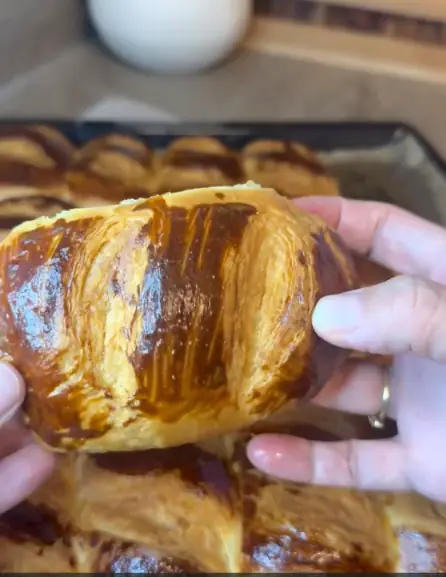
Cornetto salato dough (savory croissant dough) is a laminated yeast dough with lard and a butter block, ready in about 10 hours with chilling. It makes 3 pounds of dough for savory cornetti and keeps overnight in the fridge between steps.
Why This Recipe Works
The dough starts with yeast and a little malt syrup in warm water. The malt syrup feeds the yeast and gives the crust a deeper color when it bakes. Wait for the foam, about 10 minutes, before you add anything else, because foam tells you the yeast is alive.
Lard and butter go into the dough itself, and a mix of all-purpose and bread flour gives it strength. The bread flour builds enough structure to hold the butter layers. The fat makes the dough tender, so the finished pastry flakes instead of turning chewy.
The butter block gets a spoonful of flour worked into it. The flour makes the butter smoother and less greasy, so it rolls out in a sheet instead of breaking into chunks. Keep both the dough and the block cold. Cold butter stays in layers, and those layers are what puff up in the oven.
Cornetto Salato Dough (Savory Croissant Dough) Ingredients
For the dough
- 3 3/4 teaspoons active dry yeast
- 1 teaspoon malt syrup
- 1 1/3 cups warm water
- 2 tablespoons unsalted butter, at room temperature
- 2 tablespoons lard or unsalted butter, at room temperature
- 2 2/3 cups unbleached all-purpose flour
- 1 cup bread flour, minus 2 tablespoons
- 2 1/2 teaspoons salt
For the butter block
- 4 sticks (1 pound) cold unsalted butter
- 1/2 cup unbleached all-purpose flour
How To Make Cornetto Salato Dough (Savory Croissant Dough)
Make and chill the dough
- Wake the yeast: Stir the yeast and malt syrup into the warm water in a large mixing bowl. Leave it for about 10 minutes, until it looks foamy.
- Add the fats: Beat the 2 tablespoons of room-temperature unsalted butter and the 2 tablespoons of lard (or more unsalted butter) into the foamy yeast. Fat in the dough itself keeps the finished pastry tender.
- Mix the dough: Combine the 2 2/3 cups of all-purpose flour, the bread flour and the salt. Stir them into the yeast mixture 1 cup at a time, until the dough holds together.
- Knead briefly: Turn the dough onto a lightly floured surface and knead for 2 to 3 minutes. It should feel smooth, firm and velvety. Stop there, because too much kneading makes it tough.
- Let it rise: Put the dough in a lightly oiled bowl and cover it tightly with plastic wrap. Let it double, which takes 1 to 1 1/2 hours.
- Chill the dough: Punch the dough down hard on a lightly floured surface. Flatten it into a 1-inch-thick circle without kneading it. Wrap it in plastic wrap and refrigerate for at least 3 hours or overnight, until it is cold all the way through.
Make the butter block
- Soften the butter: Lay the 4 sticks (1 pound) of cold unsalted butter on a work surface and beat it with a rolling pin. Keep going until it turns malleable and creamy.
- Work in the flour: Sprinkle the 1/2 cup of all-purpose flour over the surface and cut the butter into it with a dough scraper. Smear the two together until smooth, so the butter rolls out in a sheet instead of breaking.
- Shape the block: Form the butter into a smooth block about 1/2 inch thick. If it has lost its chill, wrap it and refrigerate for 15 to 20 minutes.
Laminate the dough
- Add the butter: Take the cold dough and stretch it with the rolling pin into a 20 x 12-inch rectangle, with a short edge facing you. Dust the surface lightly with flour first. Tear the butter block into 1/2-inch pieces and scatter them over two thirds of the dough. Leave a 1-inch border bare.
- Fold like a letter: Fold the bare third over the middle, then fold the last third on top, like a business letter. Pinch the edges shut. Tap the dough lightly with the rolling pin to spread the butter evenly.
- First set of turns: Turn the dough 90 degrees so the top flap faces right. Roll it into a 20 x 12-inch rectangle, 1/4 inch thick. Fold it into thirds, pinch the edges and tap it with the rolling pin. Turn it 90 degrees and repeat once more.
- Rest the dough: Wrap the dough in plastic wrap and refrigerate for 45 minutes to 1 hour.
- Book fold: Roll the dough into a 20 x 12-inch rectangle. Fold the short edges so they meet in the middle, then fold the dough in half like closing a book. Turn it 90 degrees. If the dough fights back, refrigerate it for 30 minutes.
- Final fold and chill: Roll the dough again into a 20 x 12-inch rectangle and fold it into thirds. Brush off the excess flour and pinch the edges to seal. Wrap it in plastic wrap and refrigerate for at least 3 hours or overnight.
Recipe Tips
- Keep everything cold: If the butter turns soft or greasy at any point, wrap the dough and chill it for 15 to 30 minutes. Warm butter leaks out and you lose the layers.
- Flour lightly: Use only enough flour to stop sticking, and brush off the excess before each fold. Extra flour trapped between the layers makes the pastry dry.
- Seal the edges: Pinch every fold shut so the butter stays inside the dough. Butter that escapes makes the layers uneven.
- Don’t skip the rests: The dough springs back when it is tired. Resting in the fridge relaxes the gluten, so it rolls out to size without tearing.
What To Serve With Cornetto Salato Dough (Savory Croissant Dough)
Once the dough is chilled, you can shape it into cornetti salati and fill them with cheese, ham or olives. Serve them warm with coffee or alongside a plate of cured meats and cheeses.
How To Store
- Fridge: Wrap the finished dough tightly in plastic wrap and keep it in the fridge overnight before shaping.
- Freezer: Wrap the dough well and freeze it for up to 2 months. Thaw it in the fridge, never on the counter.
- Make ahead: The recipe has 3 long chilling breaks, so you can spread the work over 2 days.
FAQs
Can I use all butter instead of lard?
Yes. The recipe lists 2 tablespoons of unsalted butter as an alternative to the lard. The dough will taste slightly less savory, but it still works.
What is malt syrup for in this dough?
It gives the yeast something to eat and helps the crust brown deeply. If you don’t have it, use a small pinch of sugar, though the color and taste will be a little different.
Can I freeze savory croissant dough?
Yes. Wrap the finished, chilled dough tightly and freeze it for up to 2 months. Thaw it in the fridge before you shape it.
Why is my butter leaking out when I roll?
The dough or the butter got too warm. Wrap the dough and chill it for 30 minutes, then roll again. Also check that the edges are pinched shut.
Nutrition
Estimated per serving (1 of 12), worked out from the ingredients.
- Calories: about 430 kcal
- Total Fat: 29g
- Total Carbohydrate: 37g
- Dietary Fiber: 1g
- Protein: 6g

Cornetto Salato Dough (Savory Croissant Dough)
A laminated yeast dough with lard and a butter block, folded and chilled to make flaky layers. It makes 3 pounds of dough for savory cornetti.
12
servings1
hour9
hours600
minutesIngredients
- For the dough
3 3/4 teaspoons active dry yeast
1 teaspoon malt syrup
1 1/3 cups warm water
2 tablespoons unsalted butter, at room temperature
2 tablespoons lard or unsalted butter, at room temperature
2 2/3 cups unbleached all-purpose flour
1 cup bread flour, minus 2 tablespoons
2 1/2 teaspoons salt
- For the butter block
4 sticks (1 pound) cold unsalted butter
1/2 cup unbleached all-purpose flour
Directions
- Wake the yeast: Stir the yeast and malt syrup into the warm water in a large mixing bowl. Leave it for about 10 minutes, until it looks foamy.
- Add the fats: Beat the 2 tablespoons of room-temperature unsalted butter and the 2 tablespoons of lard (or more unsalted butter) into the foamy yeast. Fat in the dough itself keeps the finished pastry tender.
- Mix the dough: Combine the 2 2/3 cups of all-purpose flour, the bread flour and the salt. Stir them into the yeast mixture 1 cup at a time, until the dough holds together.
- Knead briefly: Turn the dough onto a lightly floured surface and knead for 2 to 3 minutes. It should feel smooth, firm and velvety. Stop there, because too much kneading makes it tough.
- Let it rise: Put the dough in a lightly oiled bowl and cover it tightly with plastic wrap. Let it double, which takes 1 to 1 1/2 hours.
- Chill the dough: Punch the dough down hard on a lightly floured surface. Flatten it into a 1-inch-thick circle without kneading it. Wrap it in plastic wrap and refrigerate for at least 3 hours or overnight, until it is cold all the way through.
- Soften the butter: Lay the 4 sticks (1 pound) of cold unsalted butter on a work surface and beat it with a rolling pin. Keep going until it turns malleable and creamy.
- Work in the flour: Sprinkle the 1/2 cup of all-purpose flour over the surface and cut the butter into it with a dough scraper. Smear the two together until smooth, so the butter rolls out in a sheet instead of breaking.
- Shape the block: Form the butter into a smooth block about 1/2 inch thick. If it has lost its chill, wrap it and refrigerate for 15 to 20 minutes.
- Add the butter: Take the cold dough and stretch it with the rolling pin into a 20 x 12-inch rectangle, with a short edge facing you. Dust the surface lightly with flour first. Tear the butter block into 1/2-inch pieces and scatter them over two thirds of the dough. Leave a 1-inch border bare.
- Fold like a letter: Fold the bare third over the middle, then fold the last third on top, like a business letter. Pinch the edges shut. Tap the dough lightly with the rolling pin to spread the butter evenly.
- First set of turns: Turn the dough 90 degrees so the top flap faces right. Roll it into a 20 x 12-inch rectangle, 1/4 inch thick. Fold it into thirds, pinch the edges and tap it with the rolling pin. Turn it 90 degrees and repeat once more.
- Rest the dough: Wrap the dough in plastic wrap and refrigerate for 45 minutes to 1 hour.
- Book fold: Roll the dough into a 20 x 12-inch rectangle. Fold the short edges so they meet in the middle, then fold the dough in half like closing a book. Turn it 90 degrees. If the dough fights back, refrigerate it for 30 minutes.
- Final fold and chill: Roll the dough again into a 20 x 12-inch rectangle and fold it into thirds. Brush off the excess flour and pinch the edges to seal. Wrap it in plastic wrap and refrigerate for at least 3 hours or overnight.