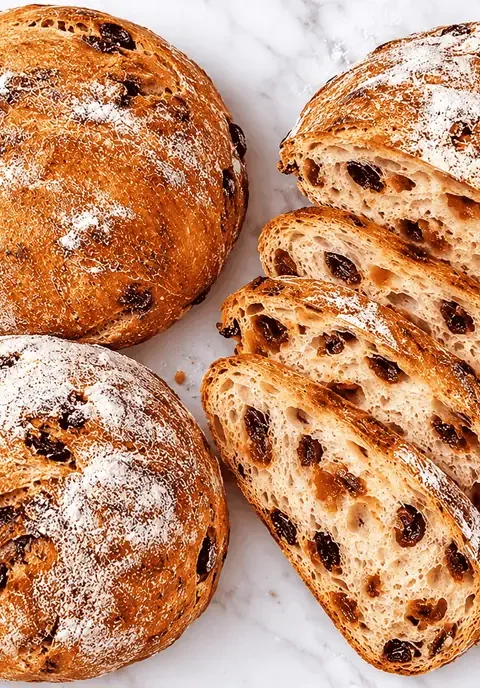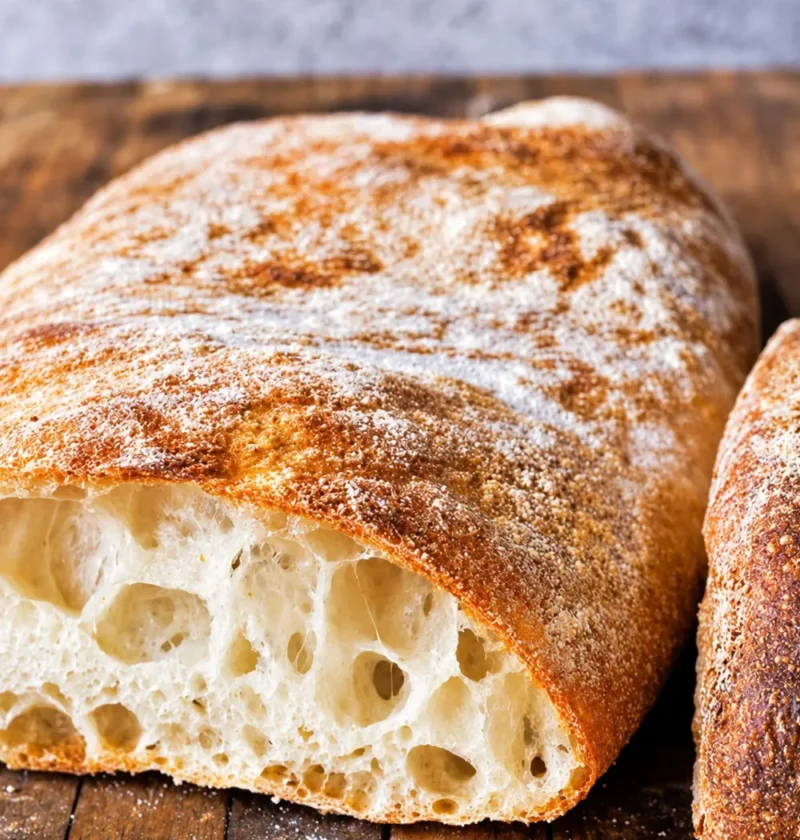
This ciabatta is a chewy Italian bread with a crisp crust and big open holes, ready in 4 hours 40 minutes. It makes 4 loaves, and you start the biga the night before.
Why This Recipe Works
The biga does most of the flavor work. You make it 12 hours ahead. That slow fermentation gives the dough a deeper taste than a quick yeast dough and builds the chew in the crumb.
A wet, sticky dough is what makes the big holes. Resist the urge to add flour while you knead. Extra flour tightens the dough, and you lose the open crumb you want in a ciabatta.
Baking on hot stones with a few sprays of water finishes the job. The heat from below makes the loaves spring up. The steam keeps the crust soft for the first 10 minutes, so the bread can expand before the crust sets.
Ciabatta Ingredients
- 1 teaspoon (3 g) active dry yeast
- 5 tablespoons (76 g) warm milk
- 1 cup plus 3 tablespoons (285 g) water, at room temperature
- 1 tablespoon (15 g) olive oil
- 2 very full cups (500 g) biga, made 12 hours ahead
- 3 3/4 cups (500 g) unbleached all-purpose flour
- 1 tablespoon (15 g) salt
- Cornmeal, for the baking stones
How To Make Ciabatta
Mix the dough
- Wake the yeast: Stir the yeast into the warm milk in the bowl of a stand mixer. Leave it for about 10 minutes, until it looks creamy, which tells you the yeast is alive.
- Add the wet ingredients: Pour in the water and olive oil, then add the biga. The biga should be the one you made 12 hours ahead. Mix with the paddle attachment until everything is blended.
- Add the flour: Stir the flour and salt together, then add them to the bowl. Mix for 2 to 3 minutes, until no dry flour is left.
- Knead in the mixer: Switch to the dough hook. Knead on low speed for 2 minutes, then on medium speed for 2 more minutes.
- Finish by hand: Turn the dough out onto a well-floured surface and knead it briefly, using as little flour as you can. It is ready when it feels velvety, supple, springy and moist. Don’t keep adding flour, even though the dough is very sticky.
Rise and shape
- First rise: Put the dough in an oiled bowl and cover it with plastic wrap. Let it rise for about 1 1/4 hours, until doubled and full of air bubbles.
- Divide and stretch: Flour your counter well and cut the dough into 4 equal pieces. Roll each piece into a cylinder, then stretch it with your fingers into a rectangle about 10 by 4 inches.
- Dimple the loaves: Cover 4 sheets of parchment paper with a thick layer of flour and set each one on a peel or baking sheet. Place a loaf on each sheet with the seam facing up. Press your fingertips firmly into the dough to dimple it.
- Second rise: Cover the loaves loosely with damp towels. Let them rise for 1 1/2 to 2 hours, until puffy but not doubled. They look flat, but they spring up in the oven.
Bake
- Heat the stones: Thirty minutes before baking, heat the oven to 425°F (220°C) with the baking stones inside. Stones that are fully hot give the bread its lift.
- Load the loaves: Dust the hot stones with cornmeal. Carefully turn each loaf over so it lands on a stone, paper side up. A loaf that sticks to the paper can be eased free with a gentle tug, or you can leave the paper on and peel it off after 10 minutes.
- Bake with steam: Bake for 20 to 25 minutes. Spritz the oven with water three times during the first 10 minutes, so the crust stays soft while the loaves rise.
- Cool: Move the ciabatta to wire racks to cool. Air under the loaves keeps the bottom crust from going soft.
Recipe Tips
- Plan the biga first: The biga has to be made 12 hours ahead, so start the night before. The dough can’t be rushed without it.
- Keep your hands floured: The dough is very sticky. Flour your hands and the counter lightly when you shape, and don’t work extra flour into the dough itself.
- Don’t wait for doubled loaves: After the second rise the loaves should look puffy and flat, not doubled. They spring up in the oven, and a loaf that has over-risen can collapse.
- Preheat the stones fully: Give the stones the full 30 minutes in the hot oven. A stone that isn’t hot enough gives a pale bottom and less lift.
What To Serve With Ciabatta
Slice ciabatta for sandwiches, panini or bruschetta, or tear it and dip it in good olive oil. It also soaks up the sauce from a pot of pasta or a bowl of soup.
How To Store
- Counter: Keep the cooled loaves in a paper bag at room temperature for up to 2 days. Plastic softens the crust.
- Freezer: Wrap cooled loaves well and freeze them for up to 3 months. Thaw at room temperature.
- Reheat: Warm the bread in a 350°F (175°C) oven for about 10 minutes to bring the crust back.
FAQs
What is a biga and do I need it?
A biga is a stiff starter dough made with a little yeast and left to ferment for about 12 hours. This recipe uses 2 very full cups of it for flavor and chew, so you do need it. Make it the night before.
Why is my ciabatta dough so sticky?
Ciabatta dough is meant to be very wet. The wetness makes the open, airy crumb. Knead it with as little flour as you can, and keep your hands lightly floured when you shape it.
Can I bake ciabatta without baking stones?
The recipe uses hot stones, and the heat from below helps the loaves spring up. The closest swap is a heavy baking sheet heated for the full 30 minutes. The bottom crust may come out a little paler.
Why did my loaves come out flat?
The loaves should look flat before they go in, and they spring up in the oven. If they stay flat, the stones may not have been hot enough or the second rise may have gone too long. Aim for puffy, not doubled.
Nutrition
Estimated per serving (1 of 4), worked out from the ingredients.
- Calories: about 560 kcal
- Total Fat: 8g
- Total Carbohydrate: 105g
- Dietary Fiber: 4g
- Protein: 16g
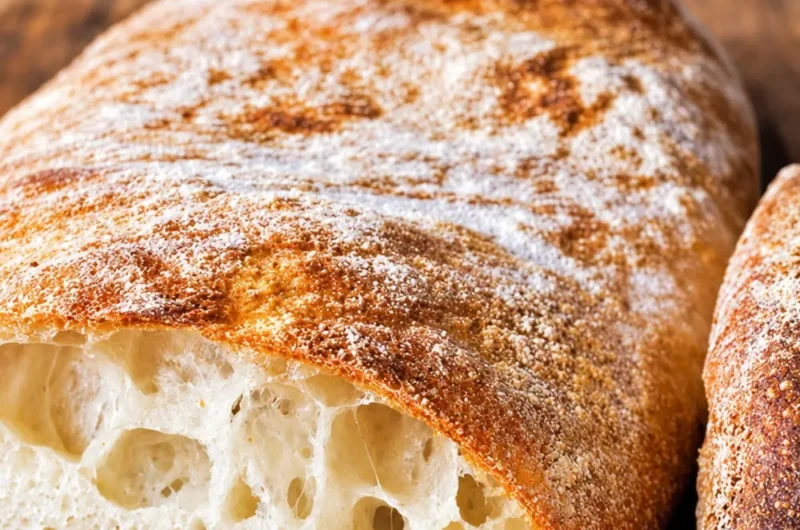
Ciabatta
Chewy ciabatta with a crisp crust and an open, airy crumb, built on a biga made the night before. Makes 4 loaves with a sticky dough and two slow rises.
4
servings30
minutes4
hours10
minutes280
minutesIngredients
1 teaspoon (3 g) active dry yeast
5 tablespoons (76 g) warm milk
1 cup plus 3 tablespoons (285 g) water, at room temperature
1 tablespoon (15 g) olive oil
2 very full cups (500 g) biga, made 12 hours ahead
3 3/4 cups (500 g) unbleached all-purpose flour
1 tablespoon (15 g) salt
Cornmeal, for the baking stones
Directions
- Wake the yeast: Stir the yeast into the warm milk in the bowl of a stand mixer. Leave it for about 10 minutes, until it looks creamy, which tells you the yeast is alive.
- Add the wet ingredients: Pour in the water and olive oil, then add the biga. The biga should be the one you made 12 hours ahead. Mix with the paddle attachment until everything is blended.
- Add the flour: Stir the flour and salt together, then add them to the bowl. Mix for 2 to 3 minutes, until no dry flour is left.
- Knead in the mixer: Switch to the dough hook. Knead on low speed for 2 minutes, then on medium speed for 2 more minutes.
- Finish by hand: Turn the dough out onto a well-floured surface and knead it briefly, using as little flour as you can. It is ready when it feels velvety, supple, springy and moist. Don’t keep adding flour, even though the dough is very sticky.
- First rise: Put the dough in an oiled bowl and cover it with plastic wrap. Let it rise for about 1 1/4 hours, until doubled and full of air bubbles.
- Divide and stretch: Flour your counter well and cut the dough into 4 equal pieces. Roll each piece into a cylinder, then stretch it with your fingers into a rectangle about 10 by 4 inches.
- Dimple the loaves: Cover 4 sheets of parchment paper with a thick layer of flour and set each one on a peel or baking sheet. Place a loaf on each sheet with the seam facing up. Press your fingertips firmly into the dough to dimple it.
- Second rise: Cover the loaves loosely with damp towels. Let them rise for 1 1/2 to 2 hours, until puffy but not doubled. They look flat, but they spring up in the oven.
- Heat the stones: Thirty minutes before baking, heat the oven to 425°F (220°C) with the baking stones inside. Stones that are fully hot give the bread its lift.
- Load the loaves: Dust the hot stones with cornmeal. Carefully turn each loaf over so it lands on a stone, paper side up. A loaf that sticks to the paper can be eased free with a gentle tug, or you can leave the paper on and peel it off after 10 minutes.
- Bake with steam: Bake for 20 to 25 minutes. Spritz the oven with water three times during the first 10 minutes, so the crust stays soft while the loaves rise.
- Cool: Move the ciabatta to wire racks to cool. Air under the loaves keeps the bottom crust from going soft.