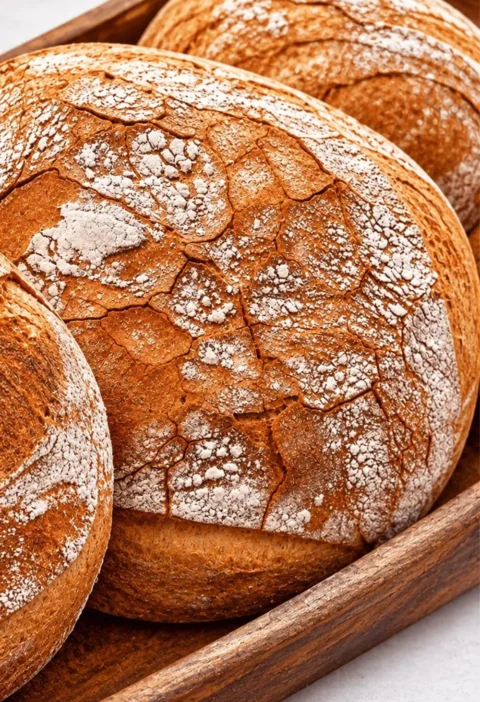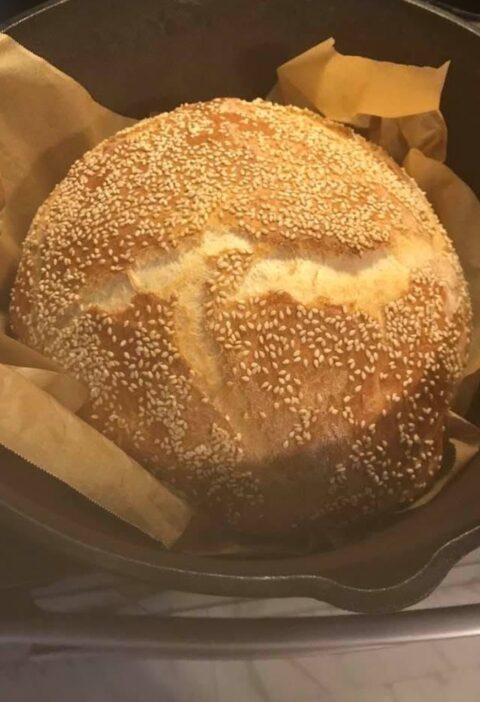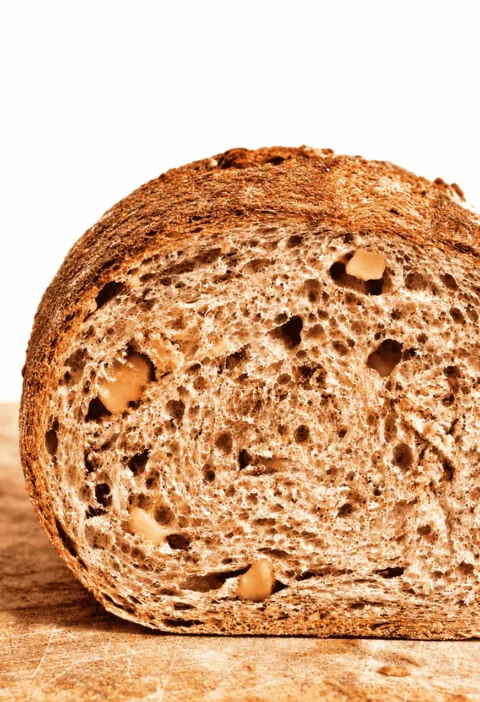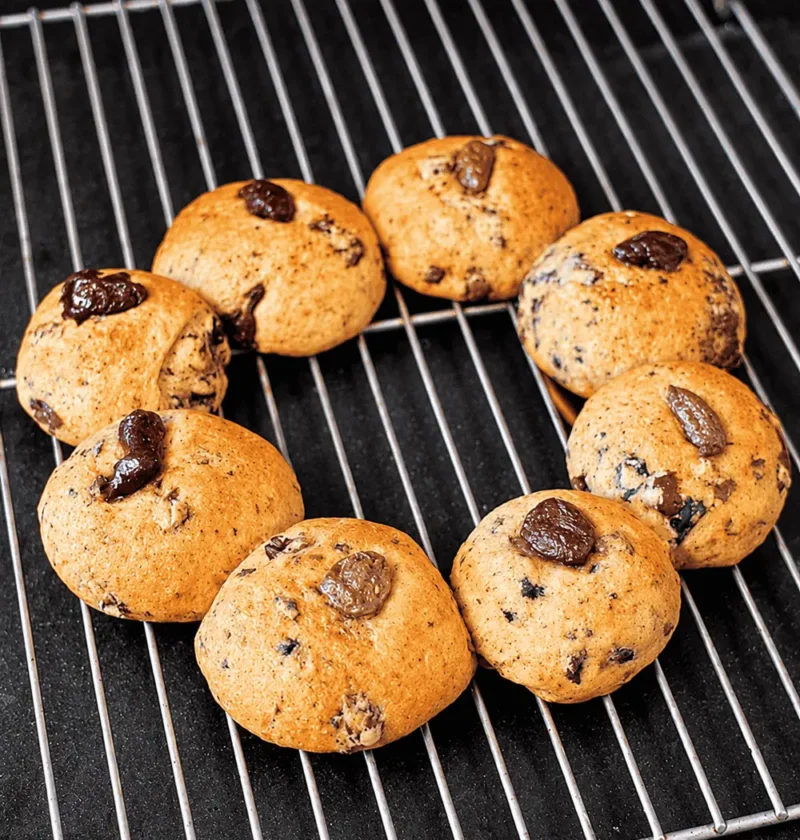
This olive bread is a rustic yeast loaf of Sicilian-style green olives, olive oil and flour, ready in about 5 hours, mostly hands-off rising. It makes 2 oval loaves, with salty olives in every slice and a few more pressed into the tops.
Why This Recipe Works
The pitted olives go into the dough whole, and the mixer breaks them down. They release their brine and flavor into the dough, so the taste runs through the whole crumb instead of sitting in a few pockets.
Don’t aim for smooth dough. This one stays soft and a little rough, because the olive pieces keep it from turning silky. Add the reserved flour only as needed, just enough that the dough is firm.
Shaping gives the loaves their structure. Folding each half into thirds and rolling it toward you with your thumbs keeps the surface tight. A tight surface holds the oval shape as the bread rises and bakes.
Olive Bread Ingredients
- 3 1/2 teaspoons (10 g) active dry yeast
- 3/4 cup (180 g) warm water
- 3 3/4 cups (500 g) unbleached all-purpose flour, plus extra for kneading
- 1/4 cup (55 g) olive oil
- 2 cups (340 g) pitted Sicilian-style green olives, plus a few whole olives set aside for the tops
- 1 1/2 teaspoons (7.5 g) salt
- Cornmeal, for the baking sheets
How To Make Olive Bread
Make the dough
- Activate the yeast: Stir the yeast into the warm water in a large mixer bowl. Let it stand for about 10 minutes, until it looks creamy, which tells you the yeast is alive.
- Add the rest: Measure out 1/3 cup of the flour and set it aside for kneading. Add the olive oil, pitted olives, the remaining flour and the salt to the bowl.
- Mix with the paddle: Mix with the paddle attachment on low speed for 2 minutes, just to bring everything together.
- Mix with the hook: Switch to the dough hook and mix for 4 to 5 minutes. The olives should break down well and release their liquid into the dough. If it looks dry, add up to 1 1/2 tablespoons of water.
- Knead by hand: Turn the dough onto a surface dusted with a little flour and knead it briefly. Work in the reserved flour a bit at a time, only as much as you need, until the dough feels firm. It will stay soft but never smooth.
Rise and shape
- First rise: Put the dough in an oiled bowl and cover it with plastic wrap. Let it rise for 1 1/2 to 2 hours, until doubled.
- Fold the halves: Cut the dough in half. Flatten each half, then fold it into thirds, like a letter.
- Roll the loaves: Roll each piece toward you, guiding it with your thumbs to keep the surface tight. Shape it into a cigar that is plumper in the middle and tapered at the ends.
- Add the olives: Set the loaves on oiled baking sheets or on peels sprinkled with cornmeal. Press a few of the reserved whole olives firmly into the tops, so they stay put in the oven.
- Second rise: Cover with a towel and let the loaves rise in a warm spot for about 1 hour. They’re ready when the dough has relaxed and the surface is no longer tight.
Bake
- Heat the oven: Heat the oven to 450°F (230°C). Baking on a stone? Start preheating a full 30 minutes before the loaves go in, and dust the stone with cornmeal only at the last moment.
- Bake the loaves: Put the loaves in the oven and lower the heat to 400°F (200°C). Bake for 35 to 40 minutes.
- Cool: Move the loaves to wire racks and let them cool before you slice them.
Recipe Tips
- Check the yeast first: If the yeast and water haven’t turned creamy after 10 minutes, start over with fresh yeast. Dead yeast means a dense loaf.
- Judge by feel: This dough should feel firm but soft, never smooth. Add the extra water only if it looks dry, and add the reserved flour only as needed.
- Press the olives in: Push the whole olives on top firmly into the dough. Loose ones can slide off as the loaf rises and bakes.
- Rise by sight: Rising times depend on how warm your kitchen is. Go by the dough: doubled after the first rise, relaxed and no longer tight after the second.
What To Serve With Olive Bread
Slice the loaves thick and serve them with olive oil for dipping, or alongside cheese and cured meats on an antipasto board. They also go well next to a bowl of soup.
How To Store
- Fridge: Wrap the cooled bread well and keep it at room temperature for 2 days, or in the fridge for up to 4 days.
- Freezer: Slice a cooled loaf, wrap it tightly and freeze for up to 3 months. Thaw in the fridge.
- Reheat: Warm slices in a 350°F (175°C) oven for 5 to 10 minutes, until hot all the way through.
FAQs
Can I use black olives instead of green?
Yes, but the flavor will be milder and the dough will take on a darker color. Use pitted olives and keep the same amount, so the dough keeps its moisture.
Can I make olive bread without a stand mixer?
You can mix and knead by hand. Stir everything together, then knead for about 10 minutes, until the olives are broken down and the dough is firm. It will be sticky at first, so add the reserved flour a little at a time.
Is this olive bread vegan?
Yes. The ingredient list has only yeast, water, flour, olive oil, olives, salt and cornmeal, so no dairy, eggs or other animal products.
Why is my olive bread dense?
The most common causes are old yeast or a rise that was cut short. Make sure the yeast turns creamy and the dough doubles in the first rise. Wait until the shaped loaves have relaxed before they go in the oven.
Nutrition
Estimated per serving (1 of 2), worked out from the ingredients.
- Calories: about 150 kcal
- Total Fat: 6g
- Total Carbohydrate: 21g
- Dietary Fiber: 1g
- Protein: 3g
Olive Bread
Rustic Italian olive bread with Sicilian-style green olives mixed into a soft yeast dough and pressed on top. Makes 2 oval loaves, with a golden crust and salty olives in every slice.
2
servings30
minutes4
hours40
minutes310
minutesIngredients
3 1/2 teaspoons (10 g) active dry yeast
3/4 cup (180 g) warm water
3 3/4 cups (500 g) unbleached all-purpose flour, plus extra for kneading
1/4 cup (55 g) olive oil
2 cups (340 g) pitted Sicilian-style green olives, plus a few whole olives set aside for the tops
1 1/2 teaspoons (7.5 g) salt
Cornmeal, for the baking sheets
Directions
- Activate the yeast: Stir the yeast into the warm water in a large mixer bowl. Let it stand for about 10 minutes, until it looks creamy, which tells you the yeast is alive.
- Add the rest: Measure out 1/3 cup of the flour and set it aside for kneading. Add the olive oil, pitted olives, the remaining flour and the salt to the bowl.
- Mix with the paddle: Mix with the paddle attachment on low speed for 2 minutes, just to bring everything together.
- Mix with the hook: Switch to the dough hook and mix for 4 to 5 minutes. The olives should break down well and release their liquid into the dough. If it looks dry, add up to 1 1/2 tablespoons of water.
- Knead by hand: Turn the dough onto a surface dusted with a little flour and knead it briefly. Work in the reserved flour a bit at a time, only as much as you need, until the dough feels firm. It will stay soft but never smooth.
- First rise: Put the dough in an oiled bowl and cover it with plastic wrap. Let it rise for 1 1/2 to 2 hours, until doubled.
- Fold the halves: Cut the dough in half. Flatten each half, then fold it into thirds, like a letter.
- Roll the loaves: Roll each piece toward you, guiding it with your thumbs to keep the surface tight. Shape it into a cigar that is plumper in the middle and tapered at the ends.
- Add the olives: Set the loaves on oiled baking sheets or on peels sprinkled with cornmeal. Press a few of the reserved whole olives firmly into the tops, so they stay put in the oven.
- Second rise: Cover with a towel and let the loaves rise in a warm spot for about 1 hour. They’re ready when the dough has relaxed and the surface is no longer tight.
- Heat the oven: Heat the oven to 450°F (230°C). Baking on a stone? Start preheating a full 30 minutes before the loaves go in, and dust the stone with cornmeal only at the last moment.
- Bake the loaves: Put the loaves in the oven and lower the heat to 400°F (200°C). Bake for 35 to 40 minutes.
- Cool: Move the loaves to wire racks and let them cool before you slice them.