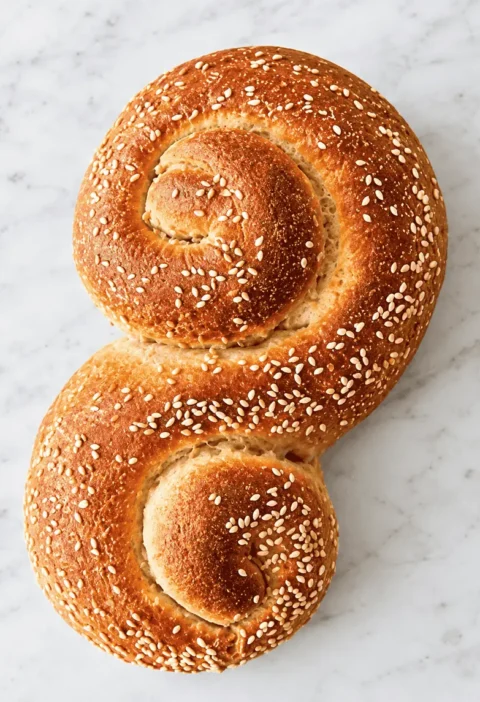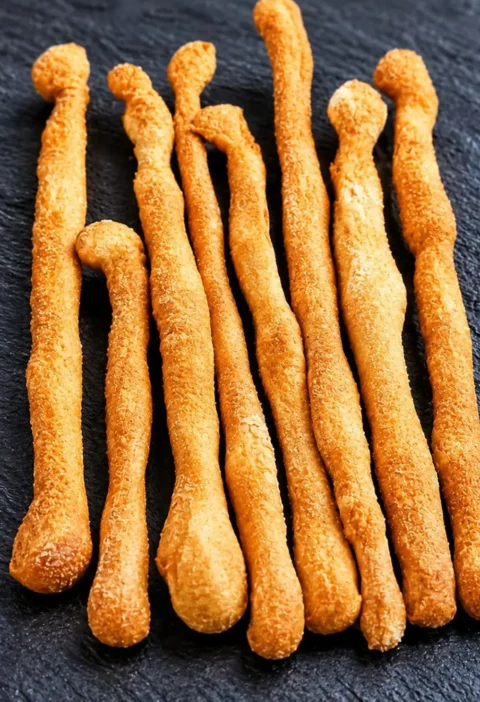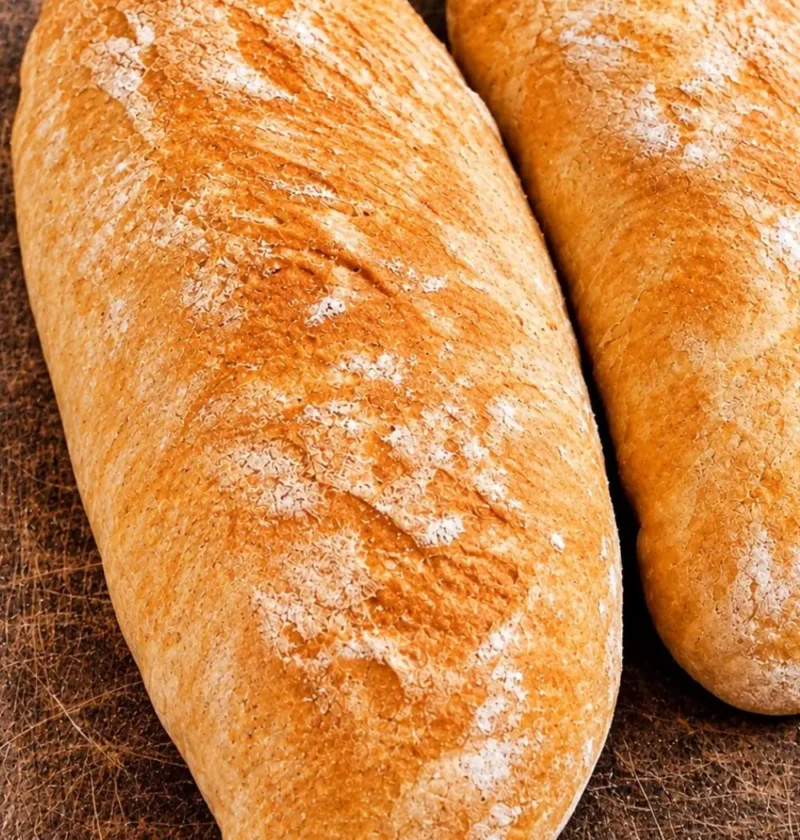
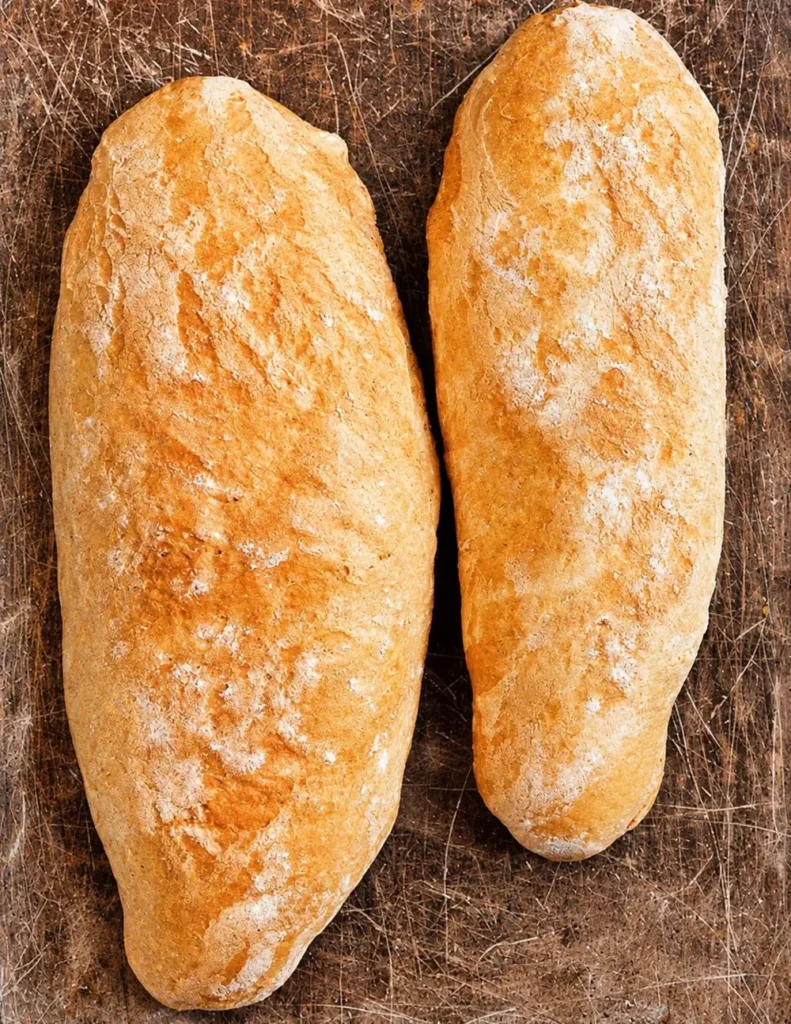
This saltless Tuscan bread (pane toscano) is a crusty loaf made with an overnight starter and a hot baking stone, ready in about 11 hours 15 minutes. It makes 1 large round loaf or 2 oval loaves, about 10 slices in all.
Why This Recipe Works
The loaf starts with a biga, a starter of 1/4 teaspoon yeast, water and flour that ferments for 6 to 10 hours. That long, slow rise builds the flavor, so the bread doesn’t taste flat without salt.
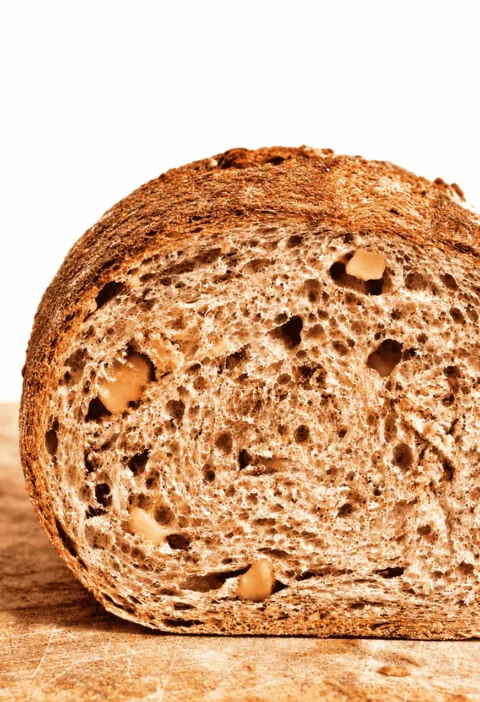
The dough is very wet and soft on purpose. A wet dough makes big air pockets and a moist, open crumb, so handle it gently and don’t press the gas out of it.
A baking stone that heats for 30 minutes, plus a hot oven at 450°F (230°C), gives the loaf a strong push at the start. Then you lower the heat to 400°F (205°C) so the inside bakes through before the crust gets too dark.
Saltless Tuscan Bread (Pane Toscano) Ingredients
For the starter (biga)
- 1/4 teaspoon active dry yeast
- 2/3 cup (160 g) warm water (105°F to 110°F / 40°C to 43°C)
- 1 1/4 cups (175 g) unbleached all-purpose flour
For the dough
- 1 1/4 teaspoons (3.5 g) active dry yeast
- 1/3 cup (80 g) warm water (105°F to 110°F / 40°C to 43°C)
- 1 cup (240 g) room-temperature water
- 3 3/4 cups (500 g) unbleached all-purpose flour, plus more for dusting
- Pinch of kosher salt (optional)
- Yellow cornmeal, for dusting the baking stone
How To Make Saltless Tuscan Bread (Pane Toscano)
Make the starter
- Wake the yeast: Stir 1/4 teaspoon active dry yeast into 2/3 cup warm water (105°F to 110°F / 40°C to 43°C) in a medium bowl. Leave it for about 10 minutes, until it turns foamy and creamy, which tells you the yeast is alive.
- Mix the biga: Add 1 1/4 cups (175 g) unbleached all-purpose flour and stir hard with a wooden spoon, about 100 strokes. The mixture should turn smooth and elastic, because that stirring starts building the gluten.
- Let it ferment: Cover the bowl tightly with plastic wrap and leave it at room temperature for 6 to 10 hours, or overnight. It is ready when it has tripled and looks bubbly.
Mix and rise the dough
- Dissolve the dough yeast: Stir 1 1/4 teaspoons (3.5 g) active dry yeast into 1/3 cup warm water (105°F to 110°F / 40°C to 43°C) in a small bowl. Wait about 10 minutes, until it looks creamy.
- Blend the wet mix: In a stand mixer bowl with the flat beater, blend the fermented starter, the yeast mixture and 1 cup room-temperature water until smooth.
- Add the flour: Pour in 3 3/4 cups (500 g) unbleached all-purpose flour and beat on low for 1 to 2 minutes, until a shaggy dough forms. If you want the pinch of salt, add it now and beat 1 minute more.
- Knead: Switch to the dough hook and knead on medium-low for about 4 minutes. The dough should turn elastic, springy and slightly silky. Turn it out on a lightly floured surface and knead briefly by hand to bring it together.
- First rise: Put the dough in a lightly oiled bowl and turn it once to coat. Cover with plastic wrap or a damp towel and let it rise in a warm spot for about 1 hour, until doubled.
Shape and rise again
- Turn it out: Tip the dough onto a generously floured surface and dust the top lightly. It will be very soft and wet, so handle it gently to keep the air pockets.
- Shape the loaf: Pat the dough gently into 1 large round loaf (boule). Or cut it in half and shape 2 oval loaves (batards).
- Coat with flour: Move the shaped dough to a well-floured rimless baking sheet or pizza peel. Flip it once so the top picks up flour, then flip it back so the smooth floured side faces up.
- Second rise: Cover loosely with a clean kitchen towel and let it rise for 45 minutes to 1 1/4 hours, until doubled in bulk.
Bake
- Heat the stone: About 30 minutes before baking, set a baking stone on the center rack and heat the oven to 450°F (230°C). A stone that is fully hot gives the bottom crust a fast start.
- Score: For a single round loaf, cut a shallow tic-tac-toe grid into the top with a sharp knife or bread lame, two parallel cuts each way.
- Start baking: Sprinkle the hot stone lightly with cornmeal and slide the dough onto it. Bake at 450°F (230°C) for 15 minutes.
- Finish baking: Lower the oven to 400°F (205°C). Bake 20 minutes more for oval loaves, or 25 to 30 minutes more for one large round. The bread is done when the crust is deep golden brown and the bottom sounds hollow when tapped.
- Cool: Move the bread to a wire rack and let it cool completely before you slice it, so the crumb can set.
Recipe Tips
- Plan the starter: Mix the biga in the evening and let it work overnight. It is ready when it has tripled and looks bubbly, so judge by that rather than the clock.
- Flour your hands and surface: The dough is wet and sticky. A generous dusting of flour on the counter and your hands makes shaping easier without kneading in extra flour.
- Check the water temperature: Water between 105°F and 110°F (40°C to 43°C) wakes the yeast. Hotter water can kill it and the dough won’t rise.
- Wait before slicing: Cutting a warm loaf squashes the crumb and makes it gummy. Let it cool completely on the rack.
What To Serve With Saltless Tuscan Bread (Pane Toscano)
Tuscan bread without salt is made for strong flavors, so serve it with a rich ragù, soup or a plate of cured meats and cheese. Tear it into a bowl of tomato soup, or slice it and rub with garlic and olive oil for toast.
How To Store
- Room temperature: Keep the cooled loaf cut side down on a board, or wrapped in a clean kitchen towel, for up to 2 days. A plastic bag makes the crust soft.
- Freezer: Slice the cooled loaf and freeze it in a freezer bag for up to 3 months. Toast the slices straight from frozen.
- Reheat: Warm a whole loaf in a 350°F (175°C) oven for about 10 minutes to crisp the crust again.
FAQs
Why is Tuscan bread made without salt?
Tuscan bread has traditionally been baked without salt, and the plain loaf is meant to go with salty cured meats, cheeses and rich sauces. This recipe lists a small pinch of kosher salt as optional if you prefer a bit of seasoning.
Can I make the dough in one day without the starter?
The biga gives the bread its flavor and chew, so don’t skip it. It needs 6 to 10 hours, so start it the night before or early in the morning.
Can I bake it without a baking stone?
Yes. Heat an upside-down baking sheet in the oven for the same 30 minutes and slide the dough onto it. The bread may brown a little less on the bottom.
Why is my dough so sticky?
The dough is meant to be soft and wet, since that is what gives the crumb its open holes. Flour your surface and hands well and handle the dough gently rather than adding more flour to the mix.
Nutrition
Estimated per serving (1 of 10), worked out from the ingredients.
- Calories: about 200 kcal
- Total Fat: 1g
- Total Carbohydrate: 41g
- Dietary Fiber: 1g
- Protein: 6g
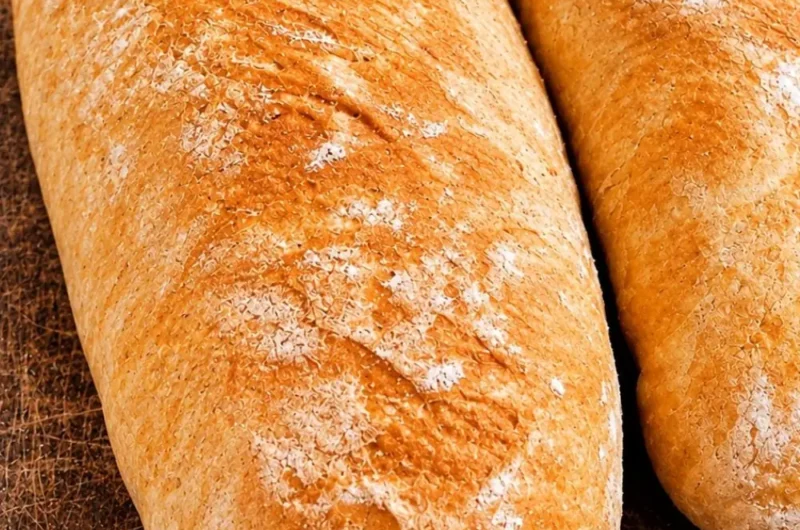
Saltless Tuscan Bread (Pane Toscano)
A crusty Tuscan loaf made with an overnight starter and a soft wet dough, baked on a hot stone. Makes 1 large round or 2 oval loaves with a chewy crumb.
10
servings50
minutes10
hours5
minutes655
minutesIngredients
- For the starter (biga)
1/4 teaspoon active dry yeast
2/3 cup (160 g) warm water (105°F to 110°F / 40°C to 43°C)
1 1/4 cups (175 g) unbleached all-purpose flour
- For the dough
1 1/4 teaspoons (3.5 g) active dry yeast
1/3 cup (80 g) warm water (105°F to 110°F / 40°C to 43°C)
1 cup (240 g) room-temperature water
3 3/4 cups (500 g) unbleached all-purpose flour, plus more for dusting
Pinch of kosher salt (optional)
Yellow cornmeal, for dusting the baking stone
Directions
- Wake the yeast: Stir 1/4 teaspoon active dry yeast into 2/3 cup warm water (105°F to 110°F / 40°C to 43°C) in a medium bowl. Leave it for about 10 minutes, until it turns foamy and creamy, which tells you the yeast is alive.
- Mix the biga: Add 1 1/4 cups (175 g) unbleached all-purpose flour and stir hard with a wooden spoon, about 100 strokes. The mixture should turn smooth and elastic, because that stirring starts building the gluten.
- Let it ferment: Cover the bowl tightly with plastic wrap and leave it at room temperature for 6 to 10 hours, or overnight. It is ready when it has tripled and looks bubbly.
- Dissolve the dough yeast: Stir 1 1/4 teaspoons (3.5 g) active dry yeast into 1/3 cup warm water (105°F to 110°F / 40°C to 43°C) in a small bowl. Wait about 10 minutes, until it looks creamy.
- Blend the wet mix: In a stand mixer bowl with the flat beater, blend the fermented starter, the yeast mixture and 1 cup room-temperature water until smooth.
- Add the flour: Pour in 3 3/4 cups (500 g) unbleached all-purpose flour and beat on low for 1 to 2 minutes, until a shaggy dough forms. If you want the pinch of salt, add it now and beat 1 minute more.
- Knead: Switch to the dough hook and knead on medium-low for about 4 minutes. The dough should turn elastic, springy and slightly silky. Turn it out on a lightly floured surface and knead briefly by hand to bring it together.
- First rise: Put the dough in a lightly oiled bowl and turn it once to coat. Cover with plastic wrap or a damp towel and let it rise in a warm spot for about 1 hour, until doubled.
- Turn it out: Tip the dough onto a generously floured surface and dust the top lightly. It will be very soft and wet, so handle it gently to keep the air pockets.
- Shape the loaf: Pat the dough gently into 1 large round loaf (boule). Or cut it in half and shape 2 oval loaves (batards).
- Coat with flour: Move the shaped dough to a well-floured rimless baking sheet or pizza peel. Flip it once so the top picks up flour, then flip it back so the smooth floured side faces up.
- Second rise: Cover loosely with a clean kitchen towel and let it rise for 45 minutes to 1 1/4 hours, until doubled in bulk.
- Heat the stone: About 30 minutes before baking, set a baking stone on the center rack and heat the oven to 450°F (230°C). A stone that is fully hot gives the bottom crust a fast start.
- Score: For a single round loaf, cut a shallow tic-tac-toe grid into the top with a sharp knife or bread lame, two parallel cuts each way.
- Start baking: Sprinkle the hot stone lightly with cornmeal and slide the dough onto it. Bake at 450°F (230°C) for 15 minutes.
- Finish baking: Lower the oven to 400°F (205°C). Bake 20 minutes more for oval loaves, or 25 to 30 minutes more for one large round. The bread is done when the crust is deep golden brown and the bottom sounds hollow when tapped.
- Cool: Move the bread to a wire rack and let it cool completely before you slice it, so the crumb can set.