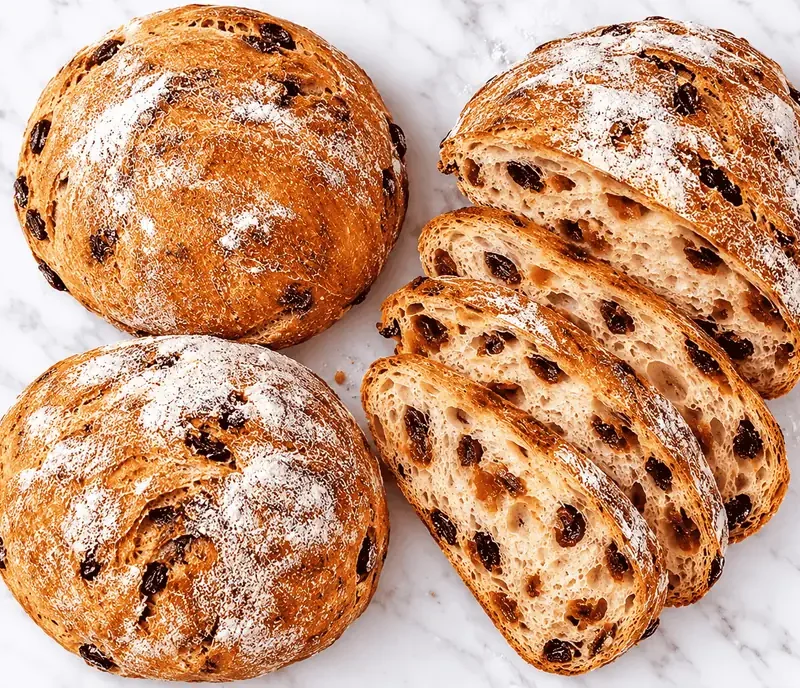
Italian raisin bread is a crusty loaf with as many raisins as flour, ready in about 6 hours 20 minutes. It makes 1 large or 2 smaller loaves, and most of that time is hands-off rising.
Why This Recipe Works
The raisins soak in water for 1 1/2 hours before they go in. Plump raisins don’t pull moisture out of the dough, so the crumb stays soft instead of dry. You then use that sweet soaking water to wake the yeast, which puts raisin flavor into the dough itself.
Toss the drained raisins in 2 to 3 tablespoons of flour. The flour coats the wet skins, so the fruit grips the dough and doesn’t slide out or tear the surface when you roll.
Add the raisins in three rounds, and let the dough rest for 15 minutes between rounds. The rest relaxes the gluten, so the dough stretches again without ripping. That is how you fit an extraordinary amount of fruit into one loaf.
Italian Raisin Bread Ingredients
- About 3 cups (17.5 ounces / 500 g) golden or dark raisins
- 3 3/4 teaspoons (0.4 ounce / 10.6 g) active dry yeast
- 1 teaspoon (0.3 ounce / 7 g) malt syrup or powder
- 1 tablespoon (0.5 ounce / 13 g) sugar
- 2 teaspoons (0.3 ounce / 9.5 g) unsalted butter, at room temperature
- 3 3/4 cups (17.5 ounces / 500 g) unbleached all-purpose flour, plus 2 to 3 tablespoons (0.6 to 1 ounce / 18 to 27 g) for the raisins
- 1 1/2 teaspoons (0.3 ounce / 7.5 g) salt
- Cornmeal, for the baking stone (optional)
How To Make Italian Raisin Bread
Soak the raisins and mix the dough
- Soak the raisins: Cover the raisins with water and leave them at room temperature for 1 1/2 hours. Use cool water for golden raisins and warm water for dark ones. Drain them, squeeze out the extra liquid, and keep the soaking water.
- Warm the raisin water: Warm 1 1/3 cups of the raisin water for the yeast. If you use a food processor, warm only 1/4 cup and chill the remaining 1 cup plus 3 tablespoons until cold.
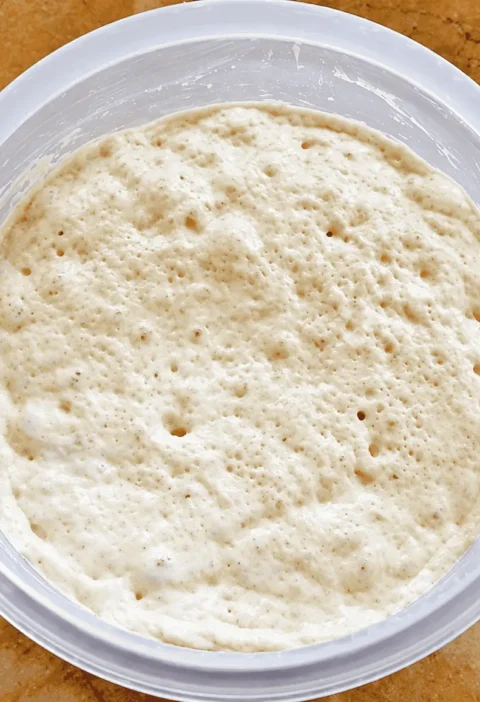
- Wake the yeast: Stir the yeast, malt and sugar into the warm raisin water in a large bowl. Leave it about 10 minutes, until foamy. Then stir in the butter.
- Knead by hand: Mix 3 1/2 cups of the flour with the salt. Stir it into the yeast mixture 2 cups at a time. Knead on a lightly floured surface for 4 to 5 minutes, until the dough is firm, elastic and silky. It comes together fast.
- Knead by mixer: Use a mixer bowl for the yeast mixture and stir in the butter with the paddle. Add 3 1/2 cups flour and the salt and mix until a dough forms. Switch to the dough hook and knead 2 to 3 minutes, until firm, elastic and silky.
- Knead by processor: Dissolve the yeast, malt and sugar in the 1/4 cup warm raisin water and wait 10 minutes. Pulse 3 1/2 cups flour and the salt in a food processor with the dough blade. Stir the butter and 1 cup plus 2 tablespoons cold raisin water into the yeast mixture. With the machine running, pour it through the feed tube as fast as the flour absorbs it. Add the last 1 tablespoon of water only if needed, then process 30 to 40 seconds more.
Rise and add the raisins
- First rise: Put the dough in a lightly oiled bowl and cover it tightly with plastic wrap. Let it rise 1 1/2 to 2 hours, until doubled.
- Pat out the dough: Turn the dough onto a lightly floured surface. Don’t punch it down or knead it. Pat or roll it into a circle about 14 inches wide. It will feel slightly sticky and tacky.
- Work in the raisins: Pat the raisins dry and toss them with 2 to 3 tablespoons of flour. Sprinkle a third over the dough, fold in the sides and roll it up. Flatten it with your palms, add half the remaining raisins and roll up again. Rest it under a towel for about 15 minutes, until it relaxes.
- Add the last raisins: Pat the dough as flat as you can and sprinkle on the remaining raisins. Get in as many as you can. Don’t worry if a few won’t fit, because this is a huge amount of fruit.
Shape, rise and bake
- Shape the loaf: Roll the dough into a long, slightly tapered loaf. Bake it whole or cut it in half for two shorter loaves. Tuck the ends under so the raisins stay beneath the taut surface.
- Second rise: Set the loaf on a floured peel, an oiled baking sheet, or a sheet lined with parchment. Cover it with a towel and let it rise about 1 hour, until well puffed and almost, but not quite, doubled. Roll it gently back and forth to set the shape and check the ends are tucked under.
- Heat the oven: Preheat the oven to 450°F (230°C). With a baking stone, turn the oven on 30 minutes ahead and sprinkle the stone with cornmeal just before the loaf goes on.
- Bake: Bake for 5 minutes. Lower the heat to 400°F (200°C) and bake 40 minutes longer. Cool the bread completely on a rack.
Recipe Tips
- Match the water to the raisins: Cool water suits golden raisins and warm water suits dark ones. Squeeze the raisins well after soaking, since extra water makes the dough too wet.
- Keep the raisins inside: Raisins that sit on the surface scorch in a 450°F oven. Tuck the ends under and keep the skin of the dough tight as you shape.
- Don’t punch the dough down: Pat it out gently after the first rise. Pressing out the gas makes the finished loaf denser.
- Cool it fully: Let the loaf cool completely on a rack before you slice it. The crumb is still setting while it’s warm and can look gummy.
What To Serve With Italian Raisin Bread
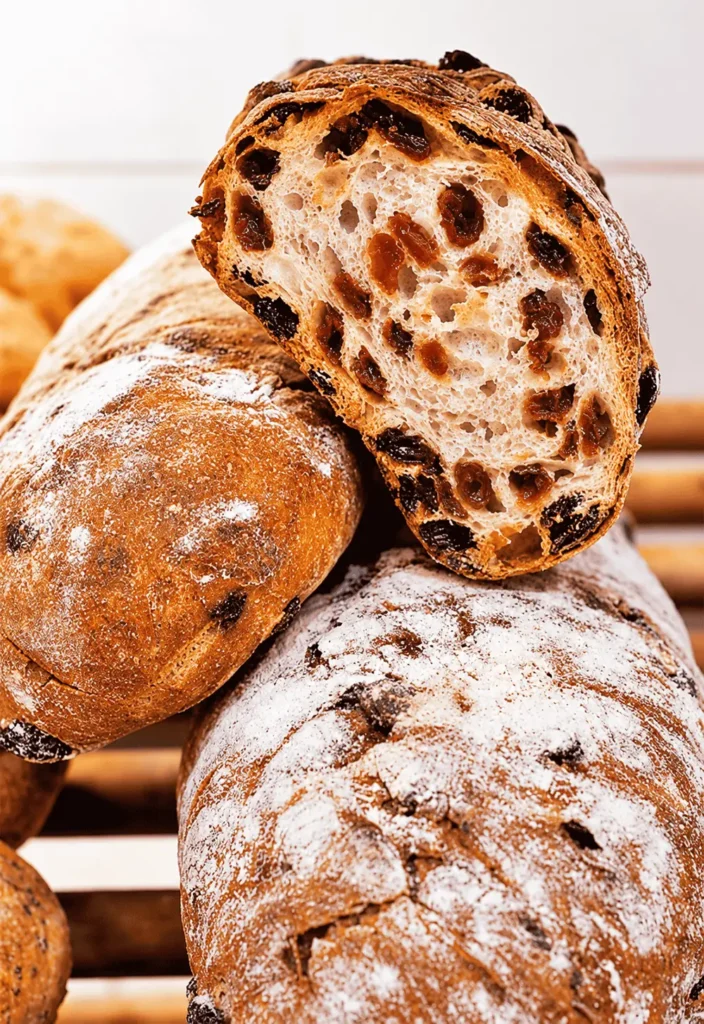
Serve a slice at breakfast with butter or ricotta, the way Milan eats it. It also works as a lunchtime snack with a cup of coffee, or next to a plate of mild cheese.
How To Store
- Counter: Wrap the cooled loaf in a clean towel or a paper bag and keep it at room temperature for 2 to 3 days. The raisins keep the crumb moist.
- Freezer: Slice the cooled loaf and freeze the slices in a sealed bag for up to 3 months. Toast them straight from frozen.
- Reheat: Warm a whole loaf in a 350°F (175°C) oven for 8 to 10 minutes to bring the crust back.
FAQs
Can I use golden and dark raisins together?
Yes. Soak them in separate bowls, cool water for the golden and warm water for the dark. Then mix them when you add them to the dough. Use the water from either bowl for the yeast.
Can I make Italian raisin bread without a mixer?
Yes. The dough comes together quickly by hand. Stir in the flour 2 cups at a time, then knead 4 to 5 minutes on a lightly floured surface until it feels silky.
Can I turn this dough into focaccia?
Yes. Follow the recipe through adding the raisins, then shape it with your basic focaccia method and let it rise. Sprinkle the top with turbinado sugar before baking.
Why won’t all the raisins fit in the dough?
The recipe has as many raisins as flour by weight, so some will stay out. That is normal. Add them in three rounds, rest the dough between rounds, and use what fits.
Nutrition
Estimated per serving (1 of 12), worked out from the ingredients.
- Calories: about 270 kcal
- Total Fat: 1g
- Total Carbohydrate: 62g
- Dietary Fiber: 3g
- Protein: 5g
Italian Raisin Bread
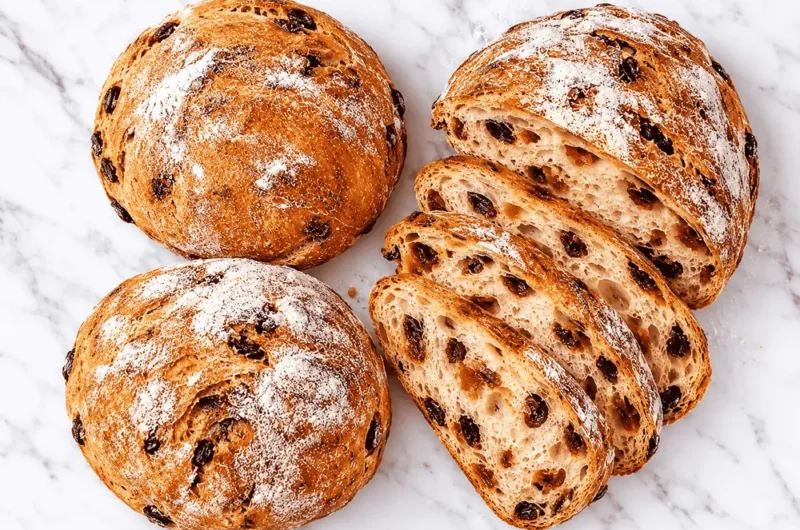
A crusty Italian loaf with as much plump raisin as flour, shaped long and baked at 450°F then 400°F. Makes 1 large or 2 smaller loaves that keep well for days.
12
servings50
minutes5
hours25
minutes375
minutesIngredients
About 3 cups (17.5 ounces / 500 g) golden or dark raisins
3 3/4 teaspoons (0.4 ounce / 10.6 g) active dry yeast
1 teaspoon (0.3 ounce / 7 g) malt syrup or powder
1 tablespoon (0.5 ounce / 13 g) sugar
2 teaspoons (0.3 ounce / 9.5 g) unsalted butter, at room temperature
3 3/4 cups (17.5 ounces / 500 g) unbleached all-purpose flour, plus 2 to 3 tablespoons (0.6 to 1 ounce / 18 to 27 g) for the raisins
1 1/2 teaspoons (0.3 ounce / 7.5 g) salt
Cornmeal, for the baking stone (optional)
Directions
- Soak the raisins: Cover the raisins with water and leave them at room temperature for 1 1/2 hours. Use cool water for golden raisins and warm water for dark ones. Drain them, squeeze out the extra liquid, and keep the soaking water.
- Warm the raisin water: Warm 1 1/3 cups of the raisin water for the yeast. If you use a food processor, warm only 1/4 cup and chill the remaining 1 cup plus 3 tablespoons until cold.
- Wake the yeast: Stir the yeast, malt and sugar into the warm raisin water in a large bowl. Leave it about 10 minutes, until foamy. Then stir in the butter.
- Knead by hand: Mix 3 1/2 cups of the flour with the salt. Stir it into the yeast mixture 2 cups at a time. Knead on a lightly floured surface for 4 to 5 minutes, until the dough is firm, elastic and silky. It comes together fast.
- Knead by mixer: Use a mixer bowl for the yeast mixture and stir in the butter with the paddle. Add 3 1/2 cups flour and the salt and mix until a dough forms. Switch to the dough hook and knead 2 to 3 minutes, until firm, elastic and silky.
- Knead by processor: Dissolve the yeast, malt and sugar in the 1/4 cup warm raisin water and wait 10 minutes. Pulse 3 1/2 cups flour and the salt in a food processor with the dough blade. Stir the butter and 1 cup plus 2 tablespoons cold raisin water into the yeast mixture. With the machine running, pour it through the feed tube as fast as the flour absorbs it. Add the last 1 tablespoon of water only if needed, then process 30 to 40 seconds more.
- First rise: Put the dough in a lightly oiled bowl and cover it tightly with plastic wrap. Let it rise 1 1/2 to 2 hours, until doubled.
- Pat out the dough: Turn the dough onto a lightly floured surface. Don’t punch it down or knead it. Pat or roll it into a circle about 14 inches wide. It will feel slightly sticky and tacky.
- Work in the raisins: Pat the raisins dry and toss them with 2 to 3 tablespoons of flour. Sprinkle a third over the dough, fold in the sides and roll it up. Flatten it with your palms, add half the remaining raisins and roll up again. Rest it under a towel for about 15 minutes, until it relaxes.
- Add the last raisins: Pat the dough as flat as you can and sprinkle on the remaining raisins. Get in as many as you can. Don’t worry if a few won’t fit, because this is a huge amount of fruit.
- Shape the loaf: Roll the dough into a long, slightly tapered loaf. Bake it whole or cut it in half for two shorter loaves. Tuck the ends under so the raisins stay beneath the taut surface.
- Second rise: Set the loaf on a floured peel, an oiled baking sheet, or a sheet lined with parchment. Cover it with a towel and let it rise about 1 hour, until well puffed and almost, but not quite, doubled. Roll it gently back and forth to set the shape and check the ends are tucked under.
- Heat the oven: Preheat the oven to 450°F (230°C). With a baking stone, turn the oven on 30 minutes ahead and sprinkle the stone with cornmeal just before the loaf goes on.
- Bake: Bake for 5 minutes. Lower the heat to 400°F (200°C) and bake 40 minutes longer. Cool the bread completely on a rack.