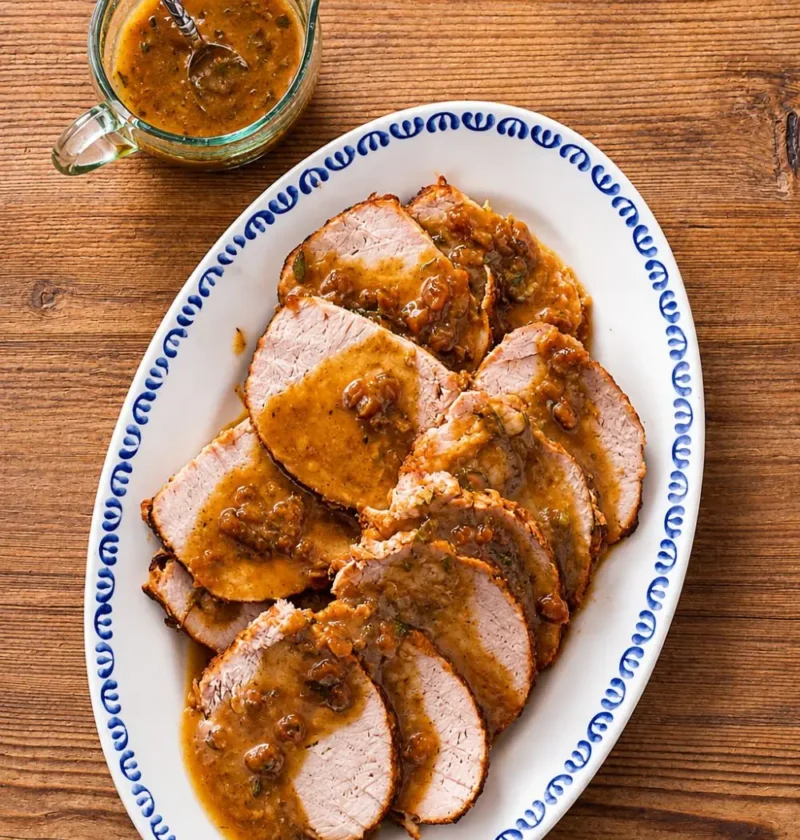
Braised pork with rosemary is a pork loin simmered in white wine with onion and garlic, then served with a mustard pan sauce, ready in 1 hour 55 minutes. It feeds 6 and needs very little hands-on work once the pork is browned.
Why This Recipe Works
Pushing half the rosemary needles into the meat before you tie it flavors the pork from the inside. The rest goes into the pot, so the herb perfumes the cooking juices as well.
Brown the pork on every side in butter and oil before any liquid goes in. The golden crust adds a deep roasted taste, and it colors the pan juices that become your sauce.
The sauce is built from the pan juices, not from scratch. A spoonful of vinegar brightens them, Dijon mustard adds a sharp edge, and fresh olive oil makes them glossy and smooth.
Braised Pork with Rosemary Ingredients
- Needles from 1 to 2 sprigs rosemary
- 1 boneless pork loin (2 1/4 pounds)
- 2 tablespoons butter
- 6 tablespoons olive oil, divided
- 1 garlic clove, crushed
- 1/2 onion, chopped
- 3/4 cup (6 fluid ounces) dry white wine
- 1 tablespoon white wine vinegar
- 1 teaspoon Dijon mustard
- Salt and pepper
How To Make Braised Pork with Rosemary
Prepare and brown the pork
- Season with rosemary: Push half the rosemary needles into the surface of the pork loin. Tie the loin neatly with kitchen twine so it keeps an even shape as it cooks.
- Brown the pork: Heat the butter and 4 tablespoons of the olive oil in a large pan. Add the pork and turn it often until it is golden brown all over, so the crust forms evenly.
Braise until tender
- Add the aromatics: Add the garlic, onion and the remaining rosemary to the pan. Pour in the wine and let it cook until it has evaporated, which takes the sharp alcohol edge off.
- Simmer: Season with salt and pepper, cover the pan, and simmer for about 1 1/2 hours. The pork is ready when a knife slides in easily.
- Rest the pork: Lift the pork out of the pan and let it rest for 10 minutes. Resting lets the juices settle back into the meat, so the slices stay moist.
Make the sauce and serve
- Finish the sauce: While the pork rests, whisk the vinegar, mustard and a pinch of pepper into the juices left in the pan. Then add the last 2 tablespoons of oil. Pour the finished sauce into a sauceboat.
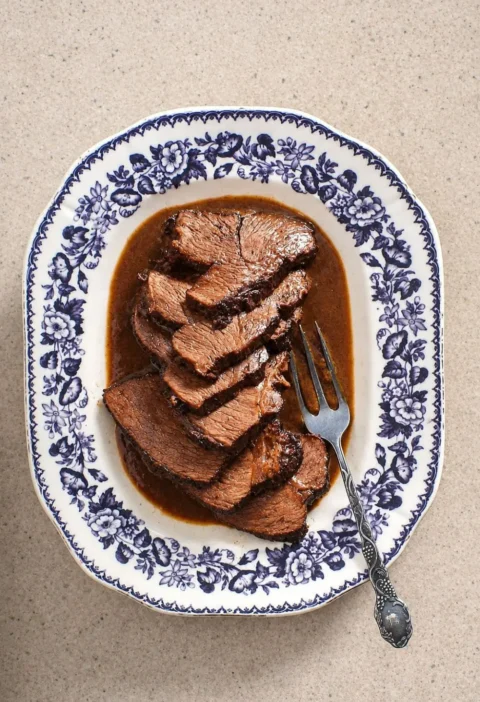
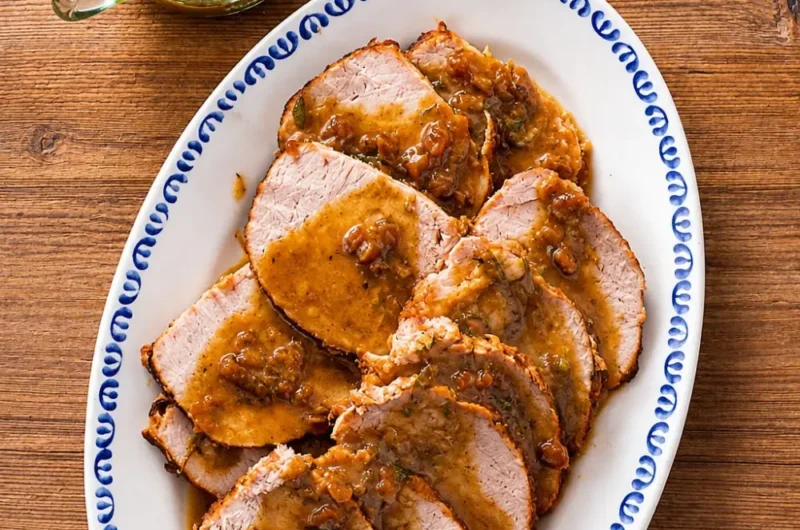
- Carve and serve: Cut off the twine and carve the pork into fairly thick slices. Arrange them on a warm serving dish, pour the sauce over the meat, and serve.
Recipe Tips
- Keep the browning even: Turn the pork often and keep the heat steady. Dark spots taste bitter, and pale spots miss out on flavor.
- Tie it snugly: Twine holds the rosemary in place and keeps the loin round, so it cooks evenly and carves into neat slices.
- Warm the dish: A warm serving dish keeps the thick slices hot at the table while the sauce soaks in.
- Slice thick: Fairly thick slices stay juicy. Thin slices of a lean loin dry out quickly.
What To Serve With Braised Pork with Rosemary
Serve the pork with creamy polenta or mashed potatoes to catch the sauce. Roasted potatoes, sauteed spinach or green beans with olive oil also fit well.
How To Store
- Fridge: Keep sliced pork and sauce together in an airtight container in the fridge for 3 to 4 days.
- Freezer: Freeze the slices with some sauce for 2 to 3 months, then thaw them in the fridge, never on the counter.
- Reheat: Warm the slices gently in the sauce over low heat, covered, until hot all the way through.
FAQs
What can I use instead of white wine?
Chicken broth with an extra splash of white wine vinegar is the closest swap. The sauce will taste a little less rounded, but the dish still works.
How do I know the pork is done?
After about 1 1/2 hours of simmering, the meat should be tender when you poke it with a knife. A meat thermometer should read at least 145°F (63°C), and braised pork is usually well past that.
Can I make braised pork with rosemary ahead of time?
Yes. Braise the pork a day ahead and keep it in its juices in the fridge. Reheat it gently, then finish the sauce with the vinegar, oil and mustard just before serving.
Why is my pork loin dry?
Loin is lean, so it dries out if you skip the rest or slice it too thin. Keep the pan covered during the simmer and let the meat rest for 10 minutes before carving.
Nutrition
Estimated per serving (1 of 6), worked out from the ingredients.
- Calories: about 470 kcal
- Total Fat: 30g
- Total Carbohydrate: 2g
- Dietary Fiber: 0g
- Protein: 42g
Braised Pork with Rosemary
Pork loin browned with rosemary, then simmered in white wine, onion and garlic until tender. A quick vinegar and Dijon pan sauce finishes this Sunday-style main for 6.
6
servings15
minutes1
hour40
minutes115
minutesIngredients
Needles from 1 to 2 sprigs rosemary
1 boneless pork loin (2 1/4 pounds)
2 tablespoons butter
6 tablespoons olive oil, divided
1 garlic clove, crushed
1/2 onion, chopped
3/4 cup (6 fluid ounces) dry white wine
1 tablespoon white wine vinegar
1 teaspoon Dijon mustard
Salt and pepper
Directions
- Season with rosemary: Push half the rosemary needles into the surface of the pork loin. Tie the loin neatly with kitchen twine so it keeps an even shape as it cooks.
- Brown the pork: Heat the butter and 4 tablespoons of the olive oil in a large pan. Add the pork and turn it often until it is golden brown all over, so the crust forms evenly.
- Add the aromatics: Add the garlic, onion and the remaining rosemary to the pan. Pour in the wine and let it cook until it has evaporated, which takes the sharp alcohol edge off.
- Simmer: Season with salt and pepper, cover the pan, and simmer for about 1 1/2 hours. The pork is ready when a knife slides in easily.
- Rest the pork: Lift the pork out of the pan and let it rest for 10 minutes. Resting lets the juices settle back into the meat, so the slices stay moist.
- Finish the sauce: While the pork rests, whisk the vinegar, mustard and a pinch of pepper into the juices left in the pan. Then add the last 2 tablespoons of oil. Pour the finished sauce into a sauceboat.
- Carve and serve: Cut off the twine and carve the pork into fairly thick slices. Arrange them on a warm serving dish, pour the sauce over the meat, and serve.