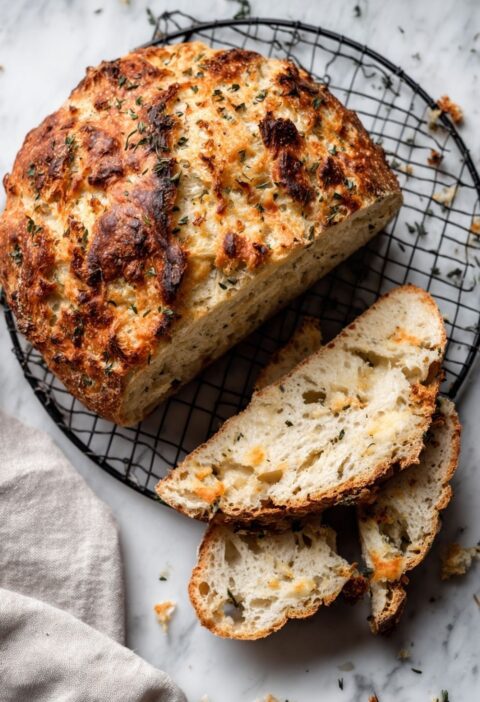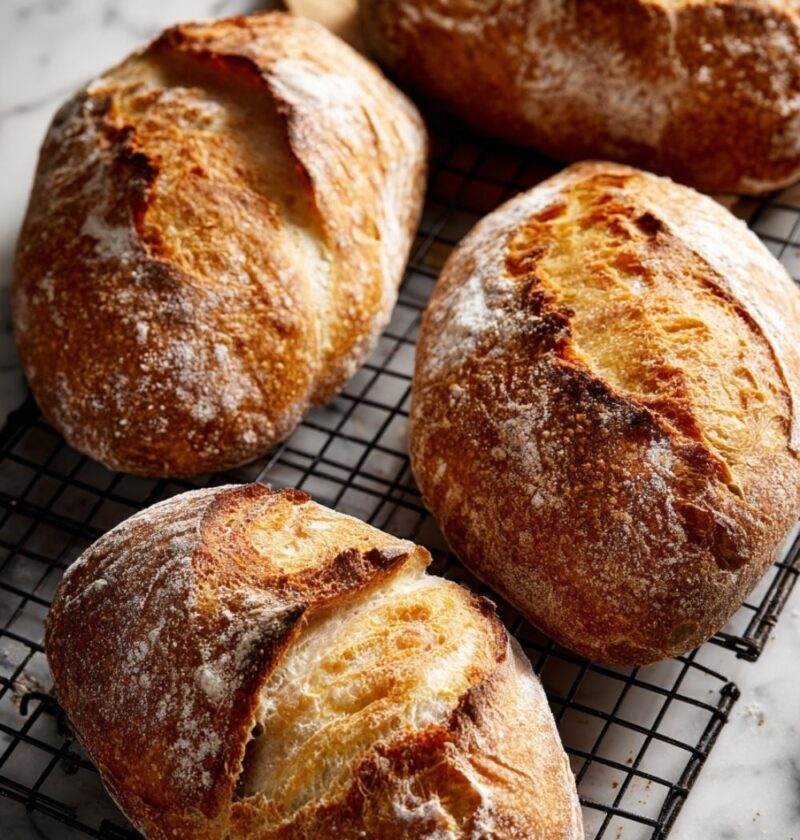
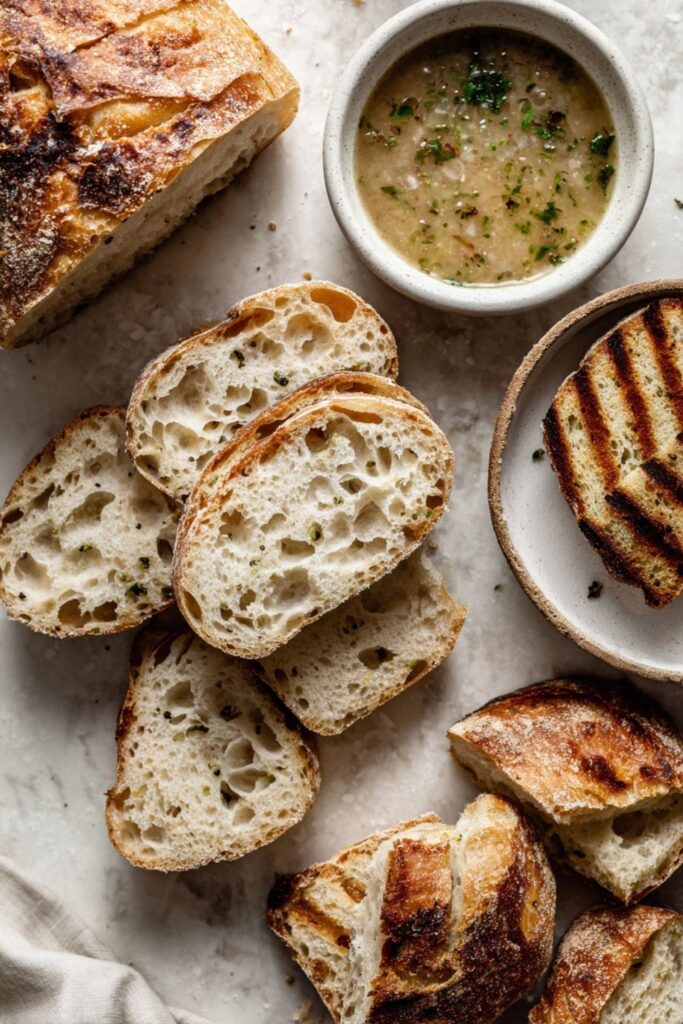
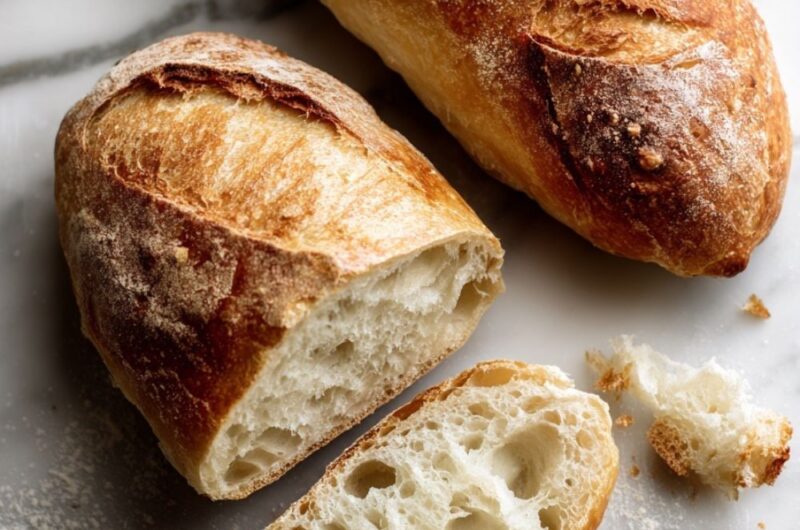
This authentic, airy Italian Ciabatta Bread is made with a simple overnight starter and high-protein flour, ready in about 24 hours. The process creates a golden, shattering crust that gives way to a chewy interior full of massive, glossy air pockets. I love slicing into this rustic loaf to reveal the beautiful honeycomb structure that makes it perfect for dipping.
What I Learned Making This
My first attempt at ciabatta was a disaster because I treated it like sandwich bread. The dough is incredibly wet—almost like a thick batter—and my instinct was to keep adding flour until it wasn’t sticky. This was a mistake that resulted in a dense, heavy brick instead of the light, airy slipper bread I wanted.
I learned that the secret is to embrace the stickiness and swap kneading for gentle folding. By wetting my hands before touching the dough and using a bench scraper for shaping, I could handle the high hydration without adding excess flour. Trusting the process allows those signature large bubbles to form and stay intact.
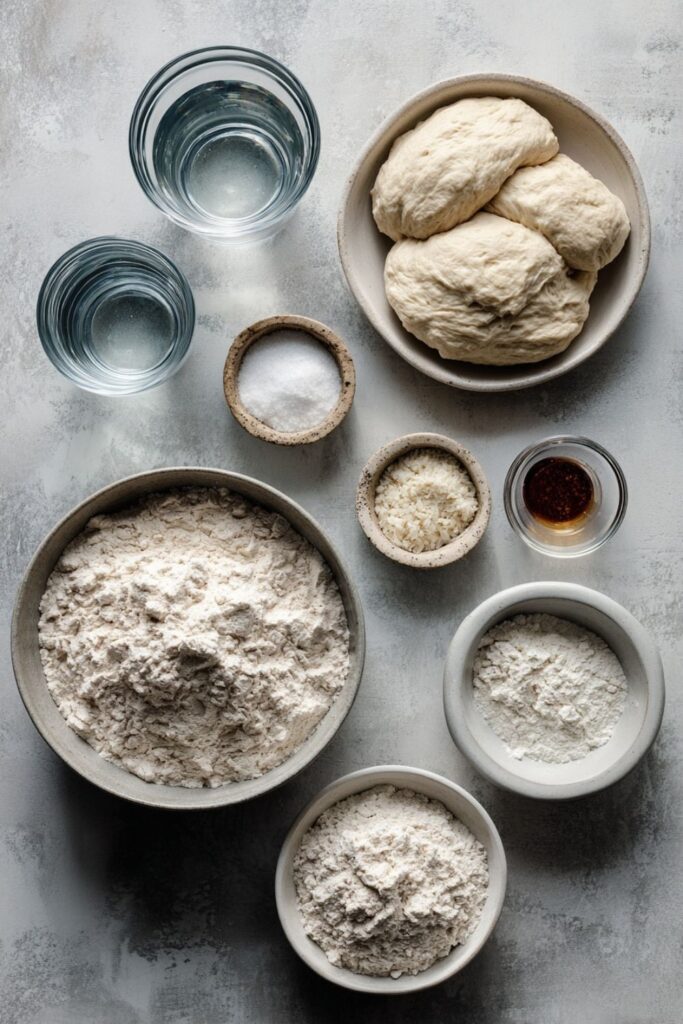
Italian Ciabatta Bread Ingredients
For the Biga (Preferment):
- 150g (1 ¼ cups) Bread flour
- 100g (½ cup minus 1 tbsp) Water, room temperature
- 1 pinch Instant yeast (approx. 1/8 tsp)
For the Dough:
- 350g (2 ¾ cups) Bread flour
- 300g (1 ¼ cups) Water, warm (95°F/35°C)
- 1 tsp Instant yeast
- 10g (2 tsp) Fine sea salt
- Extra flour or semolina for dusting
How To Make Italian Ciabatta Bread
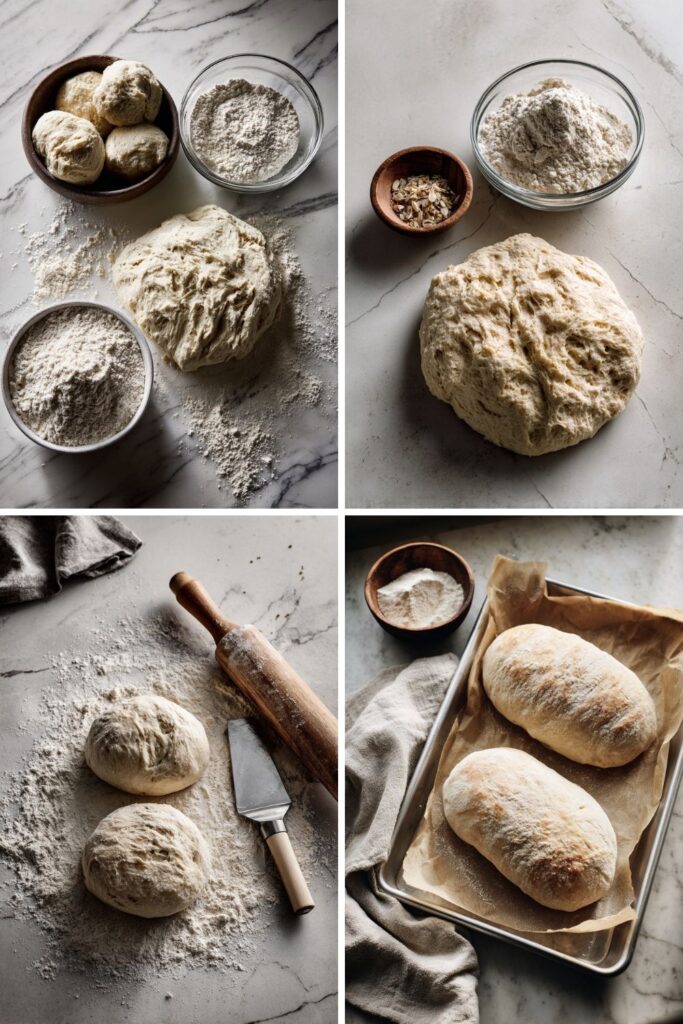
- Make the Biga: The night before baking, mix the biga ingredients in a small bowl until a shaggy, stiff dough forms. Cover loosely with plastic wrap and let it ferment at room temperature for 12–16 hours until it has tripled in size and looks bubbly.
- Mix the Dough: In a large mixing bowl, combine the warm water and the fermented biga. Break the biga up with your fingers or a spatula until it partially dissolves. Add the flour, yeast, and salt. Mix until no dry flour remains; the dough will be very wet and sticky. Rest for 30 minutes.
- Stretch and Fold: With wet hands, grab one edge of the dough, stretch it up high, and fold it over to the center. Rotate the bowl and repeat for all four sides. Cover and rest for 30 minutes. Repeat this stretch-and-fold process 3 times total over 90 minutes.
- Bulk Fermentation: After the last fold, cover the bowl and let the dough rise undisturbed for 1.5 to 2 hours, or until it is very puffy and bubbly.
- Shape the Loaves: Heavily flour your work surface and the top of the dough. Gently turn the dough out, being careful not to deflate the bubbles. Using a bench scraper, cut the dough into two equal rectangles. Dust the cut sides with flour.
- Final Proof: Transfer the loaves to a parchment-lined baking sheet or a baker’s couche dusted with flour (or semolina). Cover with a slightly oiled towel or inverted tray. Let rise for 45 minutes until puffy.
- Bake with Steam: Preheat oven to 450°F (230°C). Place a metal pan on the bottom rack. Slide the bread onto the middle rack and immediately pour a cup of boiling water into the hot metal pan to create steam. Bake for 25–30 minutes until the crust is deep golden brown and sounds hollow when tapped. Cool completely on a wire rack.
Recipe Tips
- Use Wet Hands: Because this is an 80% hydration dough, it will stick to dry skin instantly. Keep a bowl of water nearby and dip your hands before every fold to prevent sticking without adding flour.
- Don’t Knock the Air Out: During the final shaping steps, handle the dough as if it were fragile glass. The large air bubbles created during fermentation are what give ciabatta its character; squashing them yields dense bread.
- Steam is Crucial: The steam in the first 10 minutes of baking keeps the crust soft, allowing the bread to expand fully (oven spring) before the crust hardens. This creates the signature crispy, thin crust.
- Wait to Slice: It is tempting to cut warm bread, but ciabatta needs to cool completely. The interior finishes setting as it cools; cutting too early will make the crumb gummy.
What To Serve With Italian Ciabatta Bread
This bread is the ultimate vehicle for soaking up liquids, making it perfect alongside a bowl of ribollita or minestrone soup. It also serves as the traditional foundation for bruschetta when toasted and rubbed with garlic and olive oil. For a simple lunch, slice it horizontally to make sturdy paninis that hold up well to grilling.
How To Store
Store fresh ciabatta in a paper bag at room temperature for up to 2 days; plastic bags will soften the crust too much. For longer storage, slice the loaf once cooled, wrap it tightly in foil or plastic, and freeze for up to 3 months. Reheat frozen slices directly in the toaster or oven to restore the crunch.
FAQs
Why is my ciabatta flat?
Flat ciabatta usually means the yeast was old, the room was too cold for rising, or the air bubbles were knocked out during shaping. It can also happen if the gluten wasn’t developed enough during the stretch and fold steps.
Can I use all-purpose flour?
It is not recommended. Ciabatta relies on the high protein content of bread flour (12-14%) to build a strong gluten network that can trap air in such a wet dough. All-purpose flour may result in a flatter, weaker loaf.
Do I need a stand mixer?
No, this recipe uses a no-knead method involving time and folding. A mixer can be used, but the stretch-and-fold technique is actually better for preserving the open crumb structure.
What is a biga?
Biga is a type of Italian pre-ferment (starter) made from flour, water, and a tiny amount of yeast. It adds complex flavor, improves texture, and helps the bread stay fresh longer compared to a loaf made in a single day.
Nutrition
- Calories: 180 kcal
- Total Fat: 1g
- Saturated Fat: 0g
- Cholesterol: 0mg
- Sodium: 390mg
- Total Carbohydrate: 36g
- Protein: 6g
Try More Recipes:
- Italian Herb Sourdough Bread Recipe
- Panettone Christmas Bread Italian Recipe
- Stuffed Italian Bread Recipe
Italian Ciabatta Bread
2
servings30
minutes20
minutesItalian Ciabatta Bread features a crisp crust and chewy crumb, made with bread flour and water, and ready in 20 hours. This rustic loaf is perfect for weekend baking or simple panini nights. The high hydration dough creates massive air pockets for an authentic bakery texture.
Ingredients
For the Biga (Preferment):
150g (1 ¼ cups) Bread flour
100g (½ cup minus 1 tbsp) Water, room temperature
1 pinch Instant yeast (approx. 1/8 tsp)
For the Dough:
350g (2 ¾ cups) Bread flour
300g (1 ¼ cups) Water, warm (95°F/35°C)
1 tsp Instant yeast
10g (2 tsp) Fine sea salt
Extra flour or semolina for dusting
Directions
- Make the Biga: The night before baking, mix the biga ingredients in a small bowl until a shaggy, stiff dough forms. Cover loosely with plastic wrap and let it ferment at room temperature for 12–16 hours until it has tripled in size and looks bubbly.
- Mix the Dough: In a large mixing bowl, combine the warm water and the fermented biga. Break the biga up with your fingers or a spatula until it partially dissolves. Add the flour, yeast, and salt. Mix until no dry flour remains; the dough will be very wet and sticky. Rest for 30 minutes.
- Stretch and Fold: With wet hands, grab one edge of the dough, stretch it up high, and fold it over to the center. Rotate the bowl and repeat for all four sides. Cover and rest for 30 minutes. Repeat this stretch-and-fold process 3 times total over 90 minutes.
- Bulk Fermentation: After the last fold, cover the bowl and let the dough rise undisturbed for 1.5 to 2 hours, or until it is very puffy and bubbly.
- Shape the Loaves: Heavily flour your work surface and the top of the dough. Gently turn the dough out, being careful not to deflate the bubbles. Using a bench scraper, cut the dough into two equal rectangles. Dust the cut sides with flour.
- Final Proof: Transfer the loaves to a parchment-lined baking sheet or a baker’s couche dusted with flour (or semolina). Cover with a slightly oiled towel or inverted tray. Let rise for 45 minutes until puffy.
- Bake with Steam: Preheat oven to 450°F (230°C). Place a metal pan on the bottom rack. Slide the bread onto the middle rack and immediately pour a cup of boiling water into the hot metal pan to create steam. Bake for 25–30 minutes until the crust is deep golden brown and sounds hollow when tapped. Cool completely on a wire rack.